
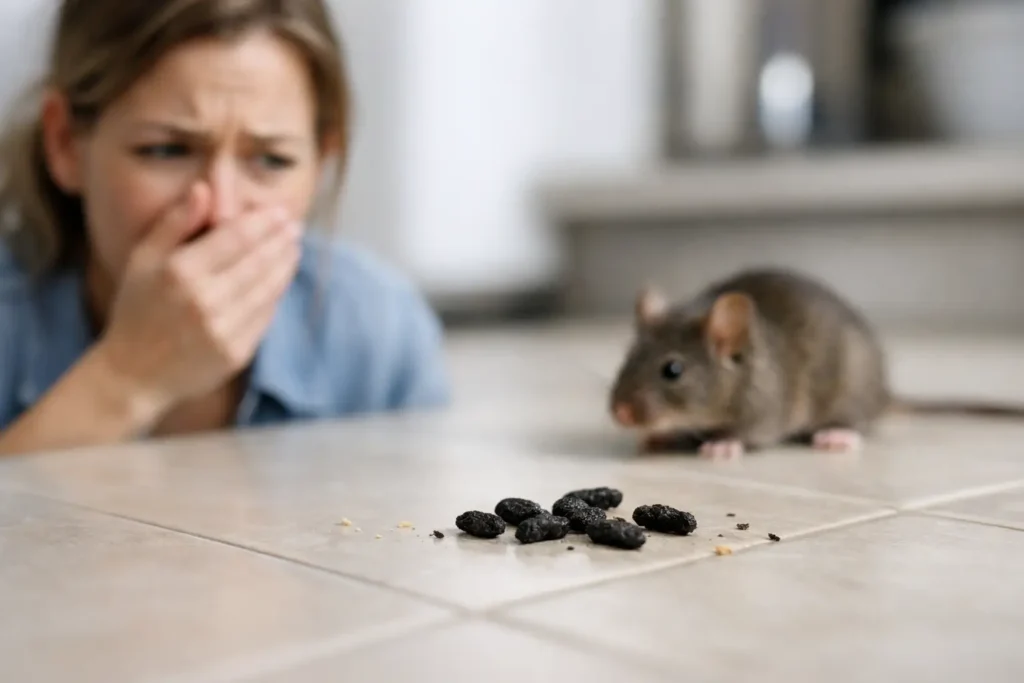
You find a few dark pellets in the garage, attic, pantry, or under the sink, and the question gets urgent fast: can rodent droppings make you sick? Yes, they can. Rodent droppings are not just unpleasant to look at. They can contaminate air, surfaces, insulation, food storage areas, and hidden parts of a home or rental property long before you realize how active the infestation has become.
In mountain communities, that risk tends to sneak up on people. Cabins sit vacant for stretches, crawl spaces stay cool and undisturbed, and garages often store pet food, seed, cardboard, and seasonal gear that make ideal rodent shelter. By the time droppings are visible, there is often more going on behind walls, in attic insulation, or around entry points than most property owners expect.
Can rodent droppings make you sick from just being nearby?
They can, especially when droppings are fresh, disturbed, or built up in enclosed areas. The biggest concern is not always direct contact. It is what happens when droppings, urine, and nesting debris dry out and get stirred into the air during sweeping, vacuuming, storage cleanouts, or renovation work.
That airborne dust can carry harmful particles. If it is inhaled, the exposure risk goes up. Rodents also travel across countertops, shelves, and stored items, so contamination is not limited to the exact spot where droppings are found. A few visible pellets in a cabinet can be the surface sign of a broader sanitation problem.
The degree of risk depends on the amount of droppings, how long they have been there, ventilation, and whether rodents are still active. A single old dropping in an outdoor shed is different from a heavily contaminated attic over a bedroom or vacation rental ceiling. Still, any indoor rodent waste should be treated seriously.
What illnesses are linked to rodent droppings?
Rodent waste has been associated with several health risks, and some are more serious than people realize. One of the best known is hantavirus, which can be linked to exposure to infected deer mouse droppings, urine, or saliva. That matters in wooded and mountain regions where deer mice are part of the local rodent population.
Hantavirus exposure is rare, but it is severe enough that no one should shrug off droppings in enclosed areas. Early symptoms can look like the flu, which makes it easy to underestimate at first. Fever, muscle aches, fatigue, and headaches may come before more serious breathing problems.
Rodent droppings can also contribute to salmonella contamination, particularly in kitchens, pantries, food storage spaces, and commercial settings. If rodents move through dry goods, utensils, prep surfaces, or shelving, bacteria can spread beyond the droppings themselves.
There are also indirect health effects that matter. Rodent waste can trigger allergies, worsen asthma, and create poor indoor air quality, especially in attics and crawl spaces where buildup gets into insulation and duct-adjacent areas. For children, older adults, and people with respiratory issues, that can become a real quality-of-life problem even without a diagnosed infection.
Why droppings in attics, garages, and cabins are a bigger problem
Not all rodent messes carry the same level of risk. Attics and crawl spaces are often worse because contamination collects over time in dry, enclosed, low-traffic areas. Once someone enters to store boxes, run wiring, check a leak, or do repairs, the waste gets disturbed.
Garages are another common danger zone because people treat them like overflow living space. Pet food, chicken feed, bird seed, camping supplies, and stored furniture give rodents easy access to food and cover. Then people walk through, move bins around, and unknowingly spread contamination into the home.
Vacation homes and short-term rentals have their own problem. A property can sit quiet for days or weeks while rodents settle in, breed, and leave droppings in cabinets, under sinks, behind appliances, and inside utility chases. When guests or owners arrive, they are often the first ones to disturb that material.
In mountain areas, colder weather also drives rodents indoors. That seasonal pressure makes exclusion and cleanup just as important as trapping or removal.
How to tell if the droppings are old, fresh, or part of an active infestation
Fresh droppings are usually dark, moist-looking, and softer. Older droppings turn dry, dull, and crumbly. That said, appearance alone does not tell the whole story. If you keep finding new pellets in the same area after cleanup, hear scratching, notice gnaw marks, or smell a stale musky odor, there is a good chance rodents are still active.
You may also see rub marks along baseboards, insulation disturbance in the attic, shredded nesting material, or small openings around vents, utility lines, garage doors, and rooflines. The key point is this: cleaning droppings without solving entry points and rodent activity only resets the clock.
That is why effective rodent work has to include inspection, removal, sanitation, and exclusion. If one piece is skipped, the problem usually returns.
Safe cleanup matters more than most people think
The biggest mistake people make is dry sweeping or vacuuming droppings. That can push contaminated particles into the air and increase exposure. If rodent waste is present, cleanup should be handled carefully and with the right protection.
Start by ventilating the area if possible. Droppings and nesting material should be sprayed with a disinfectant or bleach solution and left wet long enough to soak. Then they can be picked up with disposable towels and sealed in a bag. Gloves are important, and hands should be washed thoroughly after cleanup.
For small, isolated areas, careful cleanup may be manageable. For attics, crawl spaces, insulation contamination, commercial spaces, or heavy accumulations, professional cleanup is usually the safer choice. That is even more true if the property has ongoing rodent activity, strong odors, or contamination around HVAC-adjacent areas.
A basic wipe-down is not enough when droppings are embedded in insulation, trapped behind stored materials, or spread across hidden voids. In those cases, the cleanup has to match the scope of the problem.
When to call for professional rodent cleanup and exclusion
If you are seeing droppings in more than one room, finding them repeatedly, or dealing with an attic or crawl space issue, it is time to bring in a professional. The same goes for cabins, rentals, restaurants, retail spaces, and any property where health concerns or liability matter.
A professional approach should do more than remove rodents. It should identify access points, assess contamination, remove nesting material, disinfect affected areas, and help prevent re-entry. Humane, eco-conscious rodent control also matters. The goal is to solve the problem responsibly without creating unnecessary harm to wildlife or the surrounding environment.
For mountain properties, local knowledge is a real advantage. Rodent pressure looks different in wooded neighborhoods, around lake communities, and in homes with crawl spaces, exposed eaves, detached garages, and seasonal occupancy. A one-size-fits-all treatment plan usually misses something important.
Outbackzack handles rodent removal, sanitation, and exclusion work with that full-picture approach in mind, especially for homes and properties where wildlife pressure is part of daily life.
What to do right now if you found droppings today
Do not sweep them. Do not run a regular household vacuum over them. Keep kids and pets out of the area, check nearby food and storage items for contamination, and limit how much the material is disturbed until it can be cleaned properly.
Then think beyond the visible mess. Ask where the rodents are getting in, what they are feeding on, and whether the droppings you can see are only a fraction of the problem. A few pellets under the sink may connect to a gap around plumbing. Droppings in the garage may point to roofline access, damaged vents, or gaps at the door seal.
The health risk is real, but so is the opportunity to stop it early. Rodent droppings are a warning sign your property is being used as shelter. The sooner that is addressed with proper cleanup and exclusion, the safer your home, cabin, or business will be for everyone who uses it.
If you find rodent droppings, treat them like a health issue, not just a housekeeping problem.