
A scratching sound in the wall at dusk, dark staining near a roofline, and small droppings in the attic usually point to one thing – bats have found a way in. If you are wondering how to keep bats out safely, the right answer is never poison, glue traps, or sealing every opening overnight. Safe bat control protects your home, protects your health, and protects the animals too.
In mountain communities, bats often move into attics, eaves, vents, and cabin rooflines because those spaces stay warm, dry, and undisturbed. That makes the problem feel urgent, especially if you manage a vacation rental or have guests coming. But with bats, the fastest-looking fix is often the one that creates a bigger mess. Humane exclusion is the method that actually works.
Why safe bat removal matters
Bats are valuable wildlife. They help control insect populations and play an important role in the local ecosystem. At the same time, they do not belong inside homes, garages, or commercial buildings. Once they settle in, droppings can build up, odors can spread, and stains can appear around entry points. Over time, guano and urine can damage insulation and create sanitation concerns.
There is also a legal and ethical side to this. Many bat species are protected, and certain times of year make removal more sensitive because young bats may not be able to fly. If a structure is sealed while pups are still inside, the result can be dead animals in walls, foul odors, and a repeat infestation when surviving bats try to return. Safe exclusion takes timing seriously.
How to keep bats out safely without making it worse
The key is to let bats leave, then make sure they cannot get back in. That sounds simple, but success depends on doing the steps in the right order.
First, confirm where they are getting in. Bats do not need a large gap. They can enter through small openings along fascia boards, ridge vents, loose flashing, soffits, attic vents, chimney gaps, and areas where roofing materials have separated. The most active holes usually show dark rub marks from body oils and repeated contact.
Next, identify whether there is a colony and whether young bats may be present. This is where timing matters. During maternity season, exclusion may need to wait until juveniles can fly. If you seal the building too early, you can trap them inside. If you wait too long into colder weather, behavior patterns may change depending on the species and local conditions. It depends on the season, the structure, and what an inspection finds.
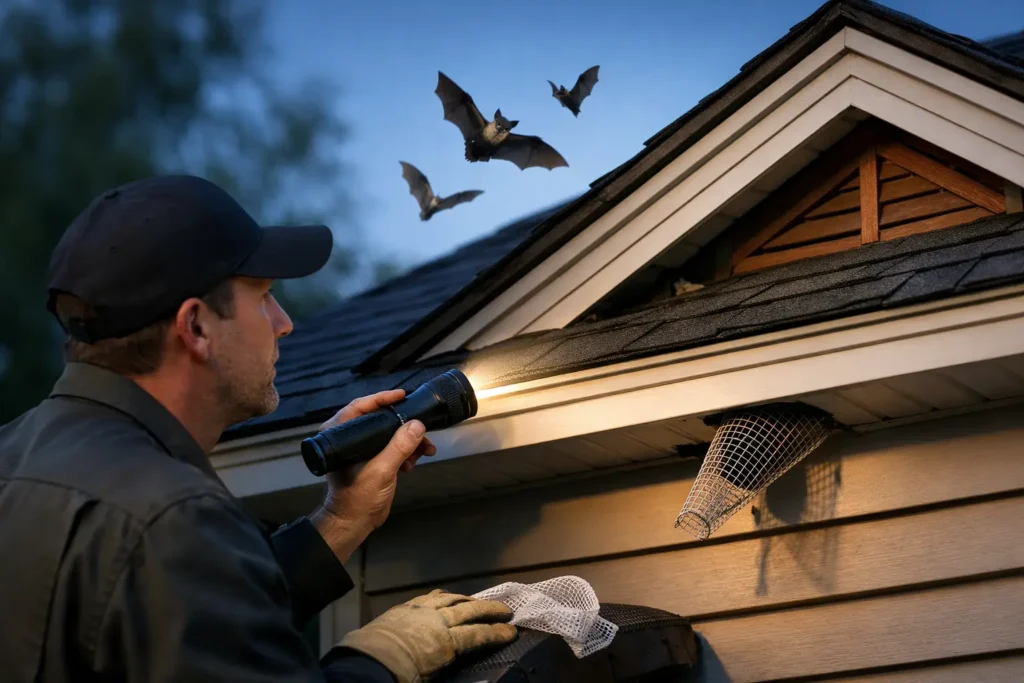
Once the main entry points are confirmed, professionals install one-way exclusion devices. These allow bats to exit at dusk but prevent re-entry. Only after they are clearly out should the final sealing and repair work begin. Skipping ahead to full sealing is one of the most common mistakes property owners make.
Common mistakes homeowners make
A lot of well-meaning people try to solve the problem with bright lights, loud sounds, mothballs, ultrasonic devices, or DIY repellents. In most cases, those methods do little or nothing. At best, they may shift bat activity to another part of the structure. At worst, they delay the real fix while droppings continue to accumulate.
Another mistake is chasing a bat around a room and assuming that removes the whole issue. A single bat indoors may have entered by accident, but it can also be a sign that a colony is living above the ceiling or in the attic. The bat you see is not always the full problem.
Then there is partial sealing. Homeowners sometimes patch one visible gap while leaving secondary holes open. That can force bats deeper into wall voids or redirect them to another side of the building. Effective exclusion requires a full building approach, not a patch-and-hope approach.
Where bats usually enter mountain homes and cabins
In wooded communities and higher-elevation neighborhoods, buildings often have the exact features bats like most. Rooflines are complex, repairs may have been done in stages over the years, and seasonal structures may sit quiet for part of the year. That creates easy shelter.
Attic vents are a common access point, especially if screens are loose, damaged, or missing. Gaps under eaves and soffits are another frequent problem. Chimneys without proper caps, warped siding, roof returns, and areas around dormers also deserve a close look. On cabins and older homes, even a small separation in trim can be enough.
Commercial properties have their own trouble spots. Warehouses, storage buildings, and mixed-use buildings may have utility penetrations, loading area gaps, or high voids under roofing materials. Because those spaces are larger and less frequently inspected, colonies can go unnoticed for longer.
What professional bat exclusion usually includes
A proper bat job is more than removal. It starts with inspection and ends with prevention.
The inspection should identify active entry points, secondary gaps, signs of guano accumulation, and any damage or contamination inside the structure. Then comes the exclusion plan, including seasonal timing and the placement of one-way devices. After the bats are out, technicians seal gaps with durable materials suited to the building.
Cleanup is often the step people underestimate. Guano should be handled carefully because disturbed droppings can create health concerns. Contaminated insulation may need removal. In heavier infestations, sanitation and disinfection work can be just as important as keeping the bats out. If the cleanup is skipped, the building may still smell, and the space may remain unhealthy even after exclusion is complete.
That is why many property owners in places like Big Bear Lake, Lake Arrowhead, Running Springs, and Crestline end up needing both exclusion and restoration work. The bat problem is not fully solved until the access points are sealed and the contaminated areas are addressed.
How to keep bats out safely for the long term
Long-term prevention starts with the exterior. Roof edges, attic vents, soffits, and flashing should be checked regularly, especially after storms, heavy wind, or seasonal freeze-thaw cycles that can open small gaps. A home that looks solid from the ground can still have multiple hidden access points near the roofline.
It also helps to think about why bats picked your structure in the first place. Warm attic spaces, low disturbance, and repeated access all make a property attractive. Prevention is not about making the property hostile. It is about removing the easy shelter opportunities.
For rental properties and cabins that sit vacant part of the week or season, routine inspections matter even more. Bat colonies can establish quietly, and by the time guests notice odor or noise, the issue may already be well developed. Property managers benefit from scheduled checks because early action is cleaner, simpler, and less expensive than delayed cleanup.
If exterior lighting or insect activity is drawing bats near the building, that can be part of the picture too. Lights do not cause an infestation by themselves, but heavy insect presence around entry gaps can make the area more attractive. Good prevention looks at the whole property, not just the one hole where bats were seen exiting.
When to call a bat removal specialist
If you have bats in the attic, bats flying inside living space, visible guano, or stains near roof gaps, this is usually not a wait-and-see problem. The same goes for buildings with recurring bat activity year after year. Repeated sightings often mean exclusion was incomplete or repairs failed over time.
Professional help is especially important if anyone may have had direct contact with a bat, if droppings are heavy, or if the structure is difficult to access safely. Steep roofs, high gables, and multi-story rooflines are common in mountain communities, and those conditions make DIY work risky. Humane exclusion is precise work, and it is easy to make the problem worse without realizing it.
Outbackzack approaches bat issues the same way we approach every wildlife problem – protect the people in the structure, remove the animals humanely, and close the door behind them for good. That means inspection, exclusion, cleanup, and repair working together instead of a quick fix that leaves part of the problem behind.
If bats have found a way into your home, cabin, or commercial property, the safest move is also the smartest one: get them out humanely, clean up the mess properly, and seal every vulnerable gap before the next dusk flight brings them right back.