
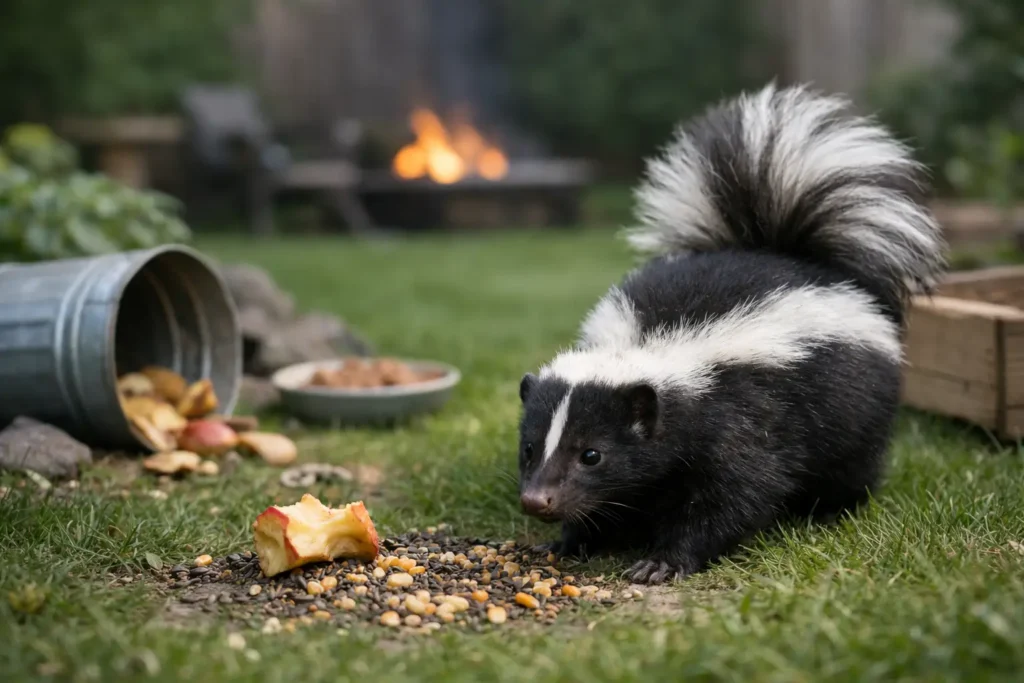
If you have ever stepped outside at night, caught that unmistakable smell, and immediately started wondering what attracts skunks to yards, the answer is usually simple – food, shelter, and easy access. Skunks are not complicated animals. They go where they can eat without much effort, hide during the day, and move around without feeling exposed.
In mountain communities like Big Bear, Lake Arrowhead, Running Springs, and Crestline, that combination is common. Cabins, crawl spaces, wood piles, pet feeding areas, and irrigated landscaping can all make a yard feel safe and productive to a skunk. The good news is that skunks usually leave clear reasons behind, which means the problem can often be traced and corrected before it gets worse.
What attracts skunks to yards most often
Most skunk activity starts with food. Skunks are opportunistic feeders, which means they do not need one specific meal source to stick around. If your yard offers insects, fallen fruit, pet food, garbage, compost, or even bird seed scattered on the ground, a skunk may treat your property like an easy nightly stop.
Grub worms are a major draw. A healthy-looking lawn can actually be part of the problem if it holds a lot of beetle larvae or other insects just below the surface. Skunks use their front claws to dig small cone-shaped holes while searching for food. Homeowners often notice the damage first and only realize later that the digging points to nighttime skunk activity.
Trash is another common attractant. Loose lids, bags left beside bins, or food waste in outdoor cans can turn a yard into a reliable feeding site. The same goes for compost piles that include kitchen scraps. Even when the smell seems minor to people, wildlife can detect it quickly.
Pet food is one of the easiest skunk attractants to fix. Leaving food bowls outside overnight, especially in quieter neighborhoods or wooded edges, sends a strong signal that your property is worth visiting again. Water bowls can have the same effect, particularly during dry spells.
Shelter matters as much as food
A skunk does not need a large den. It needs a protected, quiet space where it can rest during the day and feel secure. That is why homes, sheds, decks, and outbuildings often become part of the problem.
The most common shelter spots include openings under porches, raised decks, stair landings, sheds, hot tubs, and crawl spaces. Brush piles, stacked lumber, rock gaps, and neglected corners of the yard can also work. In rural and mountain areas, skunks often move between natural cover and manmade structures, using both depending on weather, predators, and human activity.
This is where prevention gets more nuanced. A yard may not look messy, but if there is even a small opening under a structure, skunks may still investigate it. One of the biggest mistakes property owners make is focusing only on what attracts skunks to yards as a feeding issue when denning opportunities are often just as important.
Water and irrigation can keep skunks around
Skunks do not need much water, but reliable access makes a property more attractive. Leaky spigots, pet bowls, decorative water features, and overwatered landscaping all help. In dry mountain conditions, even a small water source can make your yard stand out.
This does not mean every birdbath or drip line will cause a skunk problem. It depends on what else is available nearby. But when water is combined with food and shelter, the property becomes much more appealing. That is the pattern we see again and again on residential lots, vacation homes, and commercial properties near wooded terrain.
Why skunks like certain yards more than others
Two neighboring properties can have very different skunk activity. Usually, the difference comes down to access and predictability.
A skunk prefers a yard where it can move in and out without much disturbance. Fencing with gaps, easy routes under gates, and thick landscaping along edges all help skunks travel unnoticed. Quiet properties with limited nighttime activity are especially attractive. Vacation rentals and second homes can become targets if they sit empty for stretches and small issues go unchecked.
Yards with outdoor feeding habits also stand out. That may mean pet food, but it can also mean chickens, unsecured feed, fruit trees, or bird feeding areas where seed accumulates below. A bird feeder itself is not always the direct problem. The seed scattered on the ground is.
Season matters too. In spring and early summer, skunks may be more focused on denning and raising young. In late summer and fall, they often roam in search of steady food before colder weather. So if skunk activity seems sudden, the yard may not have changed much – the season did.
Signs a skunk is being drawn to your property
You will not always see the animal first. More often, you notice the evidence.
The most common signs include shallow digging in lawns or flower beds, a strong musky odor, tracks, tipped trash, and signs of activity under structures. Sometimes dogs alert homeowners before anyone spots the source. If a pet becomes fixated on a deck, shed, or crawl space opening, it is worth taking seriously.
It also helps to pay attention to timing. Skunks are mostly active from dusk through early morning. If odors or movement happen consistently at night, that points more strongly to a resident or repeat visitor rather than a one-time pass-through.
How to make your yard less attractive to skunks
The right fix depends on what is drawing them in. If food is the issue, clean up fallen fruit, secure trash lids, bring pet food indoors before dark, and reduce spilled seed around feeders. If grubs are attracting skunks, lawn treatment may be part of the answer, though it should be approached carefully and responsibly.
If shelter is the issue, inspection matters more than guesswork. Closing openings too quickly can create a worse problem if an animal is already underneath a structure, especially during baby season. Humane removal and proper exclusion are the safer route. Once the animal is out, vulnerable areas should be sealed with durable materials that can stand up to digging and weather.
Yard maintenance helps, but it is not a cure-all. Trimming overgrown vegetation, removing debris piles, and limiting hidden ground-level cover can reduce skunk comfort. Still, a clean-looking yard can attract skunks if the real draw is under a deck or near a crawl space access point.
Motion lighting and other deterrents sometimes help, but results vary. Some skunks are easily discouraged, and some are not, especially if they have already found food or shelter. That is why deterrents work best as a support tool, not the only plan.
When skunk activity becomes a bigger problem
A single skunk passing through is one thing. Repeated visits, denning, spraying, or digging around a home is another. Once skunks settle in, the risk goes beyond odor. There can be damage to insulation areas, contamination concerns around den sites, conflicts with pets, and the possibility of young animals being hidden under structures.
This is where local experience matters. Wildlife pressure in Southern California mountain communities is different from what you see in dense urban neighborhoods. Terrain, weather, crawl space design, cabin construction, and wooded lot lines all change how nuisance animals behave around homes and buildings. Humane removal needs to account for that, along with safe cleanup and long-term exclusion.
For homeowners and property managers, the goal should not just be getting one animal off the property. It should be removing the reason the animal chose the property in the first place. That is the difference between a temporary break and a lasting solution.
If skunks keep showing up, the smartest next step is a direct inspection of the yard, structure edges, and likely den sites. Outbackzack approaches that process with humane removal and eco-conscious prevention in mind, because protecting your property should not come at the expense of responsible wildlife handling.
A yard does not have to be perfect to avoid skunks, but it does need fewer easy rewards and fewer safe hiding places. When those are removed, most skunks move on and look for a simpler stop.