
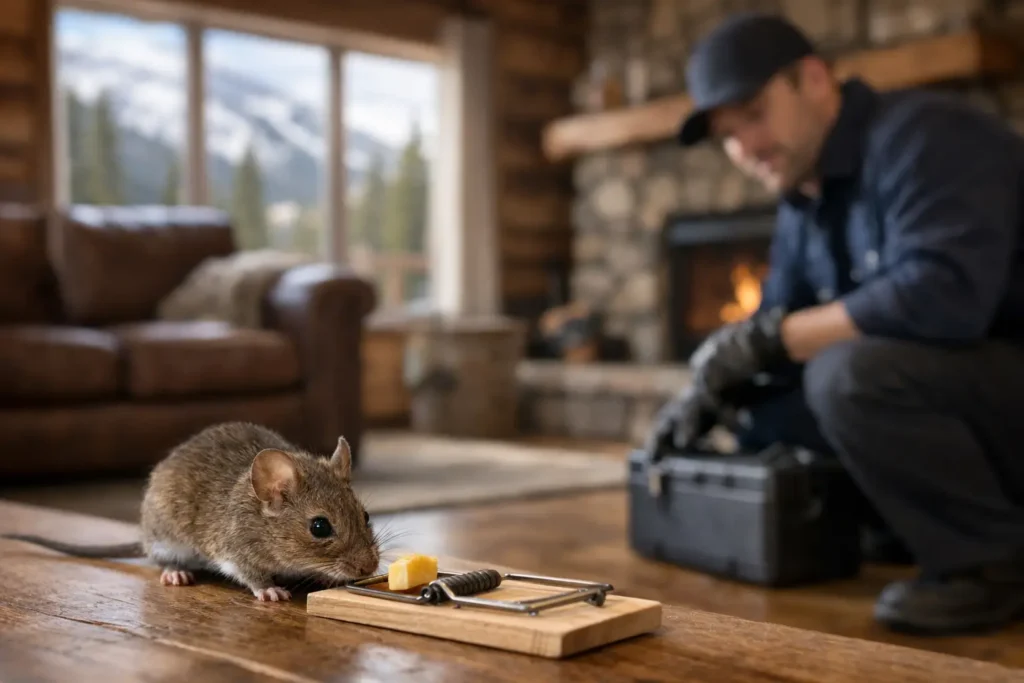
A few mouse droppings in the pantry or scratching in the attic at 2 a.m. might seem minor at first. In mountain communities, though, small rodent activity can turn into a bigger problem fast. If you need mice removal Big Bear property owners can rely on, the real goal is not just getting mice out – it is keeping them from coming back when temperatures drop, food gets scarce, or cabins sit empty between visits.
In Big Bear, Big Bear City, Sugarloaf, Fawnskin, and surrounding mountain areas, mice are persistent because the environment works in their favor. Cold weather pushes them indoors. Dense vegetation gives them cover. Vacation homes and storage areas often provide quiet nesting spots with easy access to food, insulation, wiring, and hidden wall voids. That is why a quick trap-only fix often falls short.
Why mice are such a common problem in Big Bear
Mountain properties deal with pressures that many lower-elevation homes do not. Seasonal weather swings matter. As nights get colder, mice look for warmth, and homes, garages, crawl spaces, and attics offer exactly that. Even well-kept properties can attract them if there is a small opening around a vent, utility line, roof edge, or garage door.
Cabins and short-term rentals face an extra challenge. A building that sits quiet for days or weeks can give mice time to settle in without interruption. By the time an owner or guest notices droppings or gnaw marks, nesting may already be established behind walls or in insulation.
There is also the issue of surrounding habitat. Wood piles, sheds, brush, and nearby trees can support rodent activity close to the structure. Mice do not need a wide opening to get in. In many cases, a gap the size of a dime is enough.
What mice do once they get inside
Mice are not just annoying. They contaminate, chew, and spread damage in ways that are easy to underestimate. Droppings and urine can end up in cabinets, drawers, pantries, and attic insulation. Nesting material can build up in hidden voids. Odors can linger longer than most people expect, especially in enclosed spaces.
One of the biggest concerns is gnawing. Mice chew constantly, and that includes drywall corners, stored belongings, ducting, and electrical wiring. That creates both repair costs and potential safety risks. In commercial properties or vacation rentals, the damage is not just physical. Rodent activity can affect cleanliness standards, tenant satisfaction, guest reviews, and day-to-day operations.
That is why effective mice removal is usually part removal, part sanitation, and part exclusion. If one of those pieces is missing, the problem often returns.
Signs you need mice removal in Big Bear
Some signs are obvious, but others are easy to dismiss until the activity spreads. Most homeowners first notice droppings near food storage, under sinks, in garages, or along baseboards. Others hear movement at night in the ceiling or walls. A musky odor, shredded paper or insulation, and chew marks on boxes or packaging are also common clues.
In attics and crawl spaces, the signs may be more severe than what you see in the kitchen. Mice tend to travel along edges and hidden routes, so visible evidence inside the living area is often only part of the story. If the infestation has been active for a while, contamination may extend well beyond the spots you can easily reach.
For rental owners and property managers, it often starts with a complaint that sounds small – scratching, a smell, or droppings in one room. Those are the moments when quick action matters most.
Mice removal Big Bear properties actually need
A mountain home does not benefit much from a one-size-fits-all rodent program. The right solution starts with a full inspection of how mice are entering, where they are nesting, and what conditions are supporting the infestation. Humane, eco-conscious rodent control focuses on solving the problem responsibly while protecting people, pets, and the surrounding environment.
That process usually begins with locating active areas inside and outside the structure. Entry points around vents, rooflines, utility penetrations, foundations, and door gaps need to be identified. Then comes targeted trapping or removal work, based on the layout of the property and the level of activity.
But removal is only one phase. If nesting debris, droppings, and urine contamination are left behind, the property is still not fully restored. Cleanup and disinfection help address health concerns and make the space livable again. After that, exclusion and rodent proofing are what make the service stick. Without sealing access points, the next cold snap can bring the same problem back.
Why exclusion matters more than most people think
Many property owners focus on getting rid of the mice they know are inside. That is understandable, especially when there is noise overhead or droppings in the kitchen. Still, long-term control depends on shutting down access.
Exclusion means physically blocking mice from re-entering the structure. That can involve sealing gaps, repairing vulnerable areas, screening openings, and addressing weak points around construction joints or roof transitions. In mountain communities, where rodent pressure is ongoing, exclusion is not an extra. It is the backbone of prevention.
There is some nuance here. Not every home needs the same level of repair. A newer home with a few isolated gaps may require limited sealing work. An older cabin with multiple additions, aging materials, and exposed utility paths may need a broader rodent-proofing plan. The right approach depends on how the structure was built, how often it is occupied, and how much surrounding cover mice have near the home.
Humane and eco-friendly control is the better fit
Rodent problems need decisive action, but that does not mean the only answer is a harsh extermination approach. In wildlife-heavy areas like Big Bear, property protection and environmental responsibility should go together. Humane, eco-friendly service is designed to address the infestation while avoiding unnecessary harm and reducing avoidable exposure to people, pets, and non-target animals.
That matters even more in homes with children, dogs, cats, or frequent guest turnover. A thoughtful treatment plan takes the whole property into account, not just the immediate rodent sighting. It also respects the fact that mountain communities are shared spaces between people and wildlife. The job is to keep animals out of structures where they do not belong, while using responsible methods that support long-term balance.
What homeowners and property managers can do right away
Professional service is the most effective path once mice are active, but a few immediate steps can help reduce pressure. Store food in sealed containers, clean up crumbs and pet food, and avoid leaving trash accessible in garages or side yards. Reduce clutter in storage rooms where nesting can go unnoticed. If possible, move firewood away from the house and trim back dense vegetation touching the structure.
It also helps to pay attention to the building exterior. Check weather stripping, garage door edges, vent covers, and utility entry points. Even so, many entry spots are not obvious from the ground. Rooflines, crawl space openings, and attic access areas often need a trained eye, especially on mountain homes with complex layouts.
If you have already set traps and still see fresh droppings, hear scratching, or notice new damage, that usually means the issue is larger than a minor indoor visit. At that point, the focus should shift from reaction to full-property control.
When fast service matters most
Not every mouse sighting means a major infestation. Sometimes it is a single animal that found its way inside. But if there are repeated signs, activity in more than one area, or evidence in attic and wall spaces, waiting usually makes the cleanup and repair side worse.
Fast response is especially important for vacation rentals, restaurants, retail properties, HOAs, and homes preparing for guests or seasonal occupancy. In those cases, delays can lead to contamination concerns, damaged insulation, odor problems, and unhappy tenants or visitors. A local company with mountain-area experience understands how quickly conditions can shift with weather and season.
For homeowners in Big Bear and nearby communities, the best mice service is not the one that simply removes what is visible. It is the one that finds the access points, addresses the contamination, and hardens the structure against the next wave of rodent pressure. That is the difference between temporary relief and real protection.
Outbackzack approaches rodent problems with that bigger picture in mind – humane removal, eco-friendly methods, cleanup, and exclusion that fits the realities of mountain living. If mice have made themselves at home in your attic, garage, crawl space, or walls, the right time to act is before a small problem becomes structural damage, contamination, and a repeat infestation next season. A protected home is not just cleaner and safer. It is easier to enjoy.