
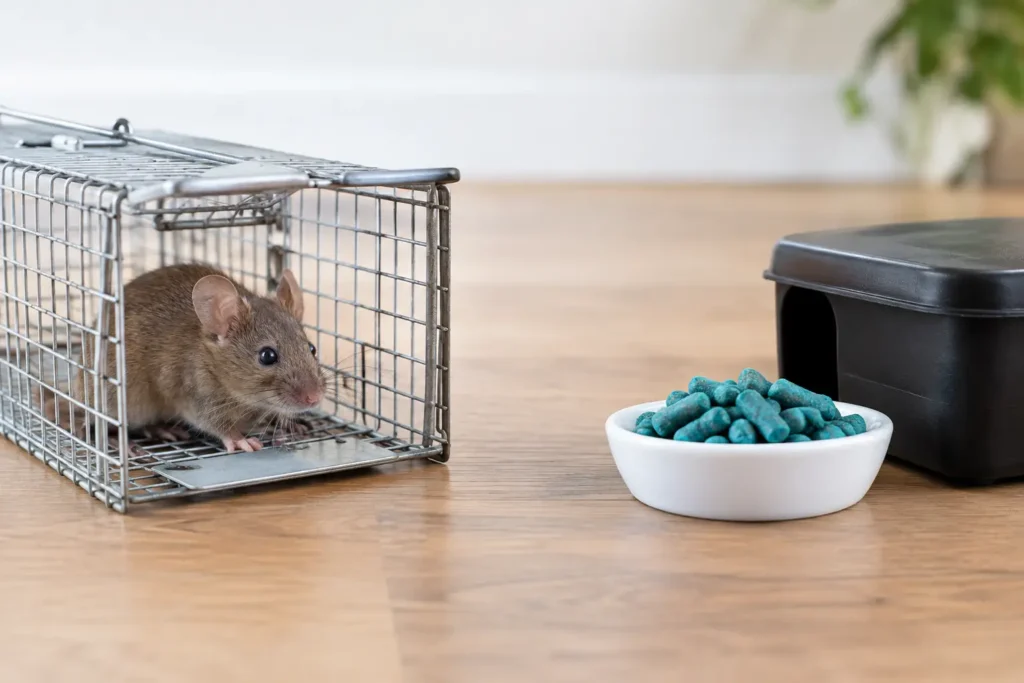
A mouse in the pantry or rat activity under a cabin can make poison feel like the fastest answer. But in mountain communities, where homes sit close to forests, wildlife corridors, pets, and neighboring properties, humane trapping versus poison is not just a question of speed. It is a decision that affects your family, your building, local wildlife, and whether the problem truly stays gone.
For most active rodent problems, the right solution begins with finding how animals entered, what is attracting them, and where they are nesting. Removal matters, but prevention is what protects a home, vacation rental, restaurant, or retail property after the initial activity is gone.
Humane Trapping Versus Poison: The Key Differences
Humane trapping and poison take very different approaches to rodent control. Trapping is a targeted method. A professional identifies travel routes, nesting areas, entry points, and signs of activity, then places appropriate traps where they can be monitored and serviced. Depending on the situation and applicable wildlife rules, animals may be removed or control measures may be used in a focused way that limits exposure beyond the problem area.
Poison, also called rodenticide, works by leaving toxic bait where rodents are expected to feed. It can reduce a rodent population, especially in large-scale agricultural or commercial settings, but it is far less selective. A poisoned rodent can travel into a wall, crawlspace, attic, or inaccessible area before it dies. It can also become prey for an owl, hawk, fox, coyote, bobcat, or domestic pet.
That distinction matters in Big Bear Lake, Lake Arrowhead, Running Springs, Crestline, and nearby mountain communities. These are places where wildlife is part of daily life, not something miles away from the property line.
Why Poison Creates Problems Inside and Outside the Building
Poison is often sold as an easy fix because bait can be placed quickly. The harder part comes afterward. Rodents do not reliably die where they feed. When an animal dies inside a wall void, under flooring, or in an attic, property owners may be left with a persistent odor, flies, staining, and a difficult cleanup. The original pest problem can turn into a sanitation and repair problem.
There is also the risk of accidental exposure. Dogs may find bait stations that were improperly secured, cats may catch weakened rodents, and curious children may reach products stored or placed carelessly. Professional-use products and secured bait stations can reduce some risks, but they do not eliminate the risk of secondary poisoning to wildlife.
In wooded and semi-rural areas, secondary poisoning is a serious concern. Predators help control rodent populations naturally. When those animals are harmed, a property may lose part of the local ecological balance that keeps future rodent pressure in check.
Poison also does not close a quarter-inch gap around a pipe, repair damaged vent screening, or stop branches from giving squirrels and rodents a route onto the roof. If an opening remains, new animals can enter after the bait is gone. That is why repeat baiting without exclusion can become an expensive cycle rather than a lasting solution.
When Targeted Trapping Is the Better Choice
Trapping is particularly effective when there is clear, localized activity. A homeowner may hear scratching in an attic, find fresh droppings in a garage, or see gnaw marks near stored food. A cabin manager may notice activity after guests leave. These situations call for an inspection and targeted placement, not a blanket application of toxic bait.
Professional trapping offers several practical advantages. The animal’s presence is confirmed, activity can be monitored, and removal is measurable. Rather than wondering whether bait was eaten and where an animal may have died, a technician can assess results and adjust the plan based on real evidence.
Trapping also supports a cleaner remediation process. After rodents are removed, affected areas can be inspected for droppings, urine contamination, nesting material, chewed wiring, and damaged insulation. Cleanup and disinfection are especially important in kitchens, garages, crawlspaces, storage rooms, and rental properties where exposure and odor can create bigger problems.
Humane methods do require diligence. Live traps must be checked frequently, handled correctly, and used in a manner consistent with local and state regulations. They are not a set-it-and-forget-it solution. The same is true of any quality rodent-control plan: it needs inspection, follow-up, and professional judgment.
Exclusion Is What Makes Rodent Control Last
The most reliable answer to recurring mice and rats is exclusion. This means identifying and sealing the openings rodents use to enter while correcting the conditions that make the property attractive in the first place.
In mountain homes and cabins, common entry points include gaps around utility lines, open crawlspace vents, deteriorated roof returns, damaged soffits, loose siding, garage-door gaps, and openings around plumbing. Mice can fit through surprisingly small spaces, so a quick visual check from the ground is rarely enough. Rooflines, attic vents, foundations, decks, sheds, and outbuildings all need attention.
Food and shelter conditions matter, too. Birdseed, pet food, overflowing trash, unsecured compost, fallen fruit, and cluttered storage areas can all support rodent activity. Firewood stacked directly against the structure gives rodents cover and a convenient route toward the home. Moving it away from the building and keeping storage areas orderly can reduce pressure, but it will not replace structural repairs.
A complete plan typically combines targeted removal, rodent proofing, sanitation, and follow-up monitoring. That approach addresses the rodents already inside and makes the next intrusion far less likely.
What About Large or Ongoing Infestations?
There are situations where rodent control requires more than a few traps. A commercial kitchen, multi-unit property, neglected outbuilding, or structure with extensive damage may have widespread activity. In these cases, the answer is not simply more poison. It is a larger, coordinated strategy.
The property needs to be inspected zone by zone. High-activity areas should be identified, sanitation issues corrected, access points prioritized, and appropriate trapping or control tools placed strategically. Exterior conditions need attention as well, because indoor control will be short-lived if rodents can continue nesting around the foundation, woodpiles, vegetation, or trash areas.
For some severe cases, pest control professionals may discuss limited bait use within a carefully managed program. The responsible question is not whether poison is always bad or trapping is always enough. It is whether the method is legal, necessary, properly secured, proportionate to the risk, and combined with exclusion. For homes, cabins, and businesses near wildlife habitat, the least-toxic effective approach is usually the wiser starting point.
Protecting Pets, Wildlife, and People
Choosing a humane, eco-conscious approach does not mean ignoring a rodent problem. Rodents can contaminate food, damage insulation, chew electrical wiring, and leave droppings that require careful cleanup. Fast action is appropriate. The goal is to solve the problem without creating a second hazard for the animals and people around the property.
That means avoiding improvised poison placement, glue boards, and unmonitored traps. It also means not sealing an entry point until the animals are confirmed out, since trapping wildlife inside a wall or attic can create avoidable suffering and property damage. Species-specific planning matters with rodents, squirrels, bats, birds, raccoons, and skunks because each animal uses buildings differently and may be protected by different rules.
Outbackzack approaches nuisance animal and rodent issues with that full picture in mind: remove the immediate threat, clean affected areas, repair access points, and help protect the property from the next one.
If you are hearing movement at night, finding fresh droppings, or seeing damage around vents and utility lines, do not wait for a small issue to become a major cleanup. A careful inspection can identify the source early and give you a practical path to a safer, cleaner, wildlife-conscious property.