
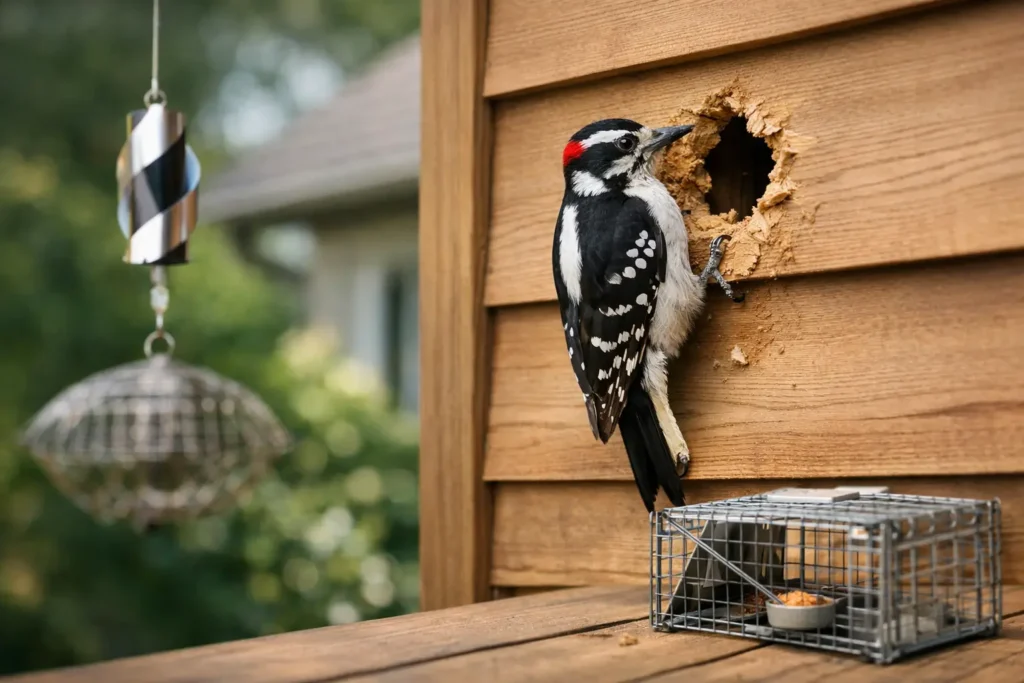
A row of fresh, round holes in cedar siding can make a homeowner panic. But before anyone reaches for a trap, poison, or a quick patch, identify what is happening. Woodpeckers are protected native birds, and the most effective answer is usually not removal in the traditional sense. It is humane deterrence, careful exclusion, and repairs that keep birds from returning.
Knowing how to remove woodpeckers humanely protects your siding, fascia, chimney trim, and eaves without harming wildlife. For homes, cabins, vacation rentals, and commercial buildings in Southern California mountain communities, the right approach also addresses the conditions that made the structure attractive in the first place.
First, Identify Why the Woodpecker Is Pecking
Woodpecker activity is not always the same problem. A bird may be drilling into siding to find insects, making loud repeated taps to claim territory, or creating a cavity for shelter or nesting. The pattern of damage offers useful clues.
Small, irregular holes or shredded sections of wood may point to insects living behind the surface. Carpenter ants, wood-boring beetles, and other insects can attract a hungry woodpecker. If the bird is finding food in the wall, simply scaring it away may only move the activity a few feet down the building.
Loud drumming on metal gutters, chimney caps, vents, or hollow siding is often territorial behavior, especially during breeding season. The bird may not be trying to enter the building at all. A larger, clean-edged cavity can indicate roosting or nesting activity, which requires extra caution.
A professional inspection can separate active insect issues from sound-related drumming and true cavity damage. That distinction matters because each calls for a different humane solution.
Understand the Legal and Humane Limits
Woodpeckers are protected under the Migratory Bird Treaty Act. In practical terms, homeowners should not trap, poison, shoot, or intentionally harm them. Active nests, eggs, and young birds also cannot be disturbed or removed without proper authorization.
This is why timing matters. Exclusion work is most straightforward when a cavity is confirmed vacant and no nesting activity is present. If birds are actively using a hole, the humane course may be to monitor the site and wait until the young have left before closing it. A wildlife professional can help determine whether a cavity is active without putting the bird or your property at greater risk.
Avoid shortcuts such as sticky repellents, chemical poisons, or loosely installed netting. These methods can injure birds, create a larger wildlife problem, and may expose pets or people to unnecessary hazards.
How to Remove Woodpeckers Humanely: Start With Deterrents
Humane removal begins by making the targeted area less rewarding and less comfortable for the bird. Deterrents work best when they are installed early, before repeated pecking becomes an established habit.
Visual movement can help interrupt a woodpecker’s approach. Reflective tape, bird-safe streamers, or wind-activated visual devices placed near the affected area may discourage a bird from landing. The key is changing their position regularly. A motionless deterrent quickly becomes part of the scenery.
For drumming on gutters, vents, and metal caps, minor modifications can sometimes reduce the sound or landing appeal. Covering a favored surface with an appropriate protective material or adjusting a loose component may make it less attractive. The correct fix depends on the structure. Do not block attic ventilation, fireplace exhaust, or any required building opening to solve a bird issue.
Sound devices can be useful in limited situations, but they are rarely a stand-alone fix. Repeated noise can disturb neighbors and lose effectiveness when birds become accustomed to it. In quiet mountain neighborhoods, visual deterrents and physical exclusion are generally better long-term choices.
A plastic owl or hawk decoy may create a brief pause, but it should not be the entire plan. Woodpeckers are observant. If the decoy never moves and nothing else changes, they often ignore it.
Address Insects Before Repairing Damage
When pecking is food-related, treating the underlying insect activity is essential. Birds are often responding to a real food source behind damaged trim, soffits, logs, or siding. Closing the hole without addressing insects can trap moisture, conceal structural deterioration, and leave the bird searching nearby.
An inspection should look for insect tunnels, soft or water-damaged wood, gaps around rooflines, and areas where moisture has encouraged pest activity. Older cabins and homes with weathered wood siding can be especially vulnerable. In some cases, the problem is not an active infestation but decayed wood that sounds hollow and is easy to excavate.
Once insect conditions have been addressed and woodpecker activity has stopped, damaged areas should be cleaned, filled, and sealed. Exterior-grade materials and a finish that matches the surrounding surface can help eliminate visual and physical cues that attract repeat pecking. If damage is extensive, replacing the affected board may be more reliable than filling multiple deep holes.
Use Physical Exclusion for Repeat Damage
If a woodpecker repeatedly targets one wall, gable, chimney chase, or eave, physical exclusion is often the strongest humane option. Properly installed bird netting or a protective barrier prevents access to the exact area without harming the bird.
This work needs to be precise. Netting should be taut, securely fastened, and installed with enough clearance that birds cannot reach the siding through it. Edges must be sealed so no bird can slip behind the barrier and become trapped. The material should also be selected and installed in a way that does not interfere with vents, roof drainage, maintenance access, or fire safety requirements.
For a small, contained area, protective screening or a durable surface treatment may be more appropriate than netting across an entire wall. The right choice depends on the building material, the height of the affected area, and whether the bird is drilling, drumming, or using a cavity.
Never seal an opening until you are certain no bird, nest, eggs, or young are inside. This is one of the most important parts of humane woodpecker control.
Make the Building Less Attractive Over Time
Prevention is not about removing every tree or eliminating birds from the property. Woodpeckers are part of healthy mountain ecosystems, and they provide natural insect control in surrounding forested areas. The goal is to keep that activity on trees and away from vulnerable structures.
Maintain exterior wood before it becomes soft, cracked, or insect-prone. Replace rotted trim, repair water intrusion, keep gutters functioning, and seal construction gaps around eaves and siding transitions. These repairs protect the building from more than woodpeckers – they also reduce opportunities for rodents, insects, and other nuisance wildlife.
If you put out suet or bird feed, move it well away from the home, cabin, or commercial structure. Feeding stations placed close to a building can increase bird activity exactly where you do not want it. A location farther from the structure, combined with healthy native trees and natural habitat, gives birds a better alternative.
Tree pruning can also help when branches provide easy access to a damaged wall or roofline. Do not rush to remove mature trees, especially during nesting season. A thoughtful trim that creates space between branches and the structure may be enough to reduce direct access.
When to Call a Humane Wildlife Professional
Call for professional help when holes are multiplying, activity involves a high roofline, you suspect insects inside a wall, or you find a cavity that may be active. It is also wise to get help when a bird is entering a vent, chimney chase, or other building opening. These situations can involve legal protections, difficult access, and the risk of accidentally trapping wildlife.
A qualified wildlife and pest control team can inspect the damage, identify whether insect pressure is involved, determine if nesting restrictions apply, and recommend humane deterrence or exclusion. The work should include prevention and repair planning, not just a temporary attempt to chase the bird away.
Outbackzack helps property owners throughout Big Bear Lake, Big Bear City, Lake Arrowhead, Running Springs, Crestline, Green Valley Lake, Sugarloaf, Fawnskin, Cedar Glen, and Twin Peaks protect structures with eco-friendly wildlife solutions. For recurring woodpecker damage, a site-specific inspection is the safest way to protect both the building and the bird.
A woodpecker on your siding is frustrating, but it does not have to turn into a cycle of damage and rushed repairs. A patient response – inspect, deter, address the cause, and exclude only when appropriate – gives your property lasting protection while keeping wildlife where it belongs: safely outside.