
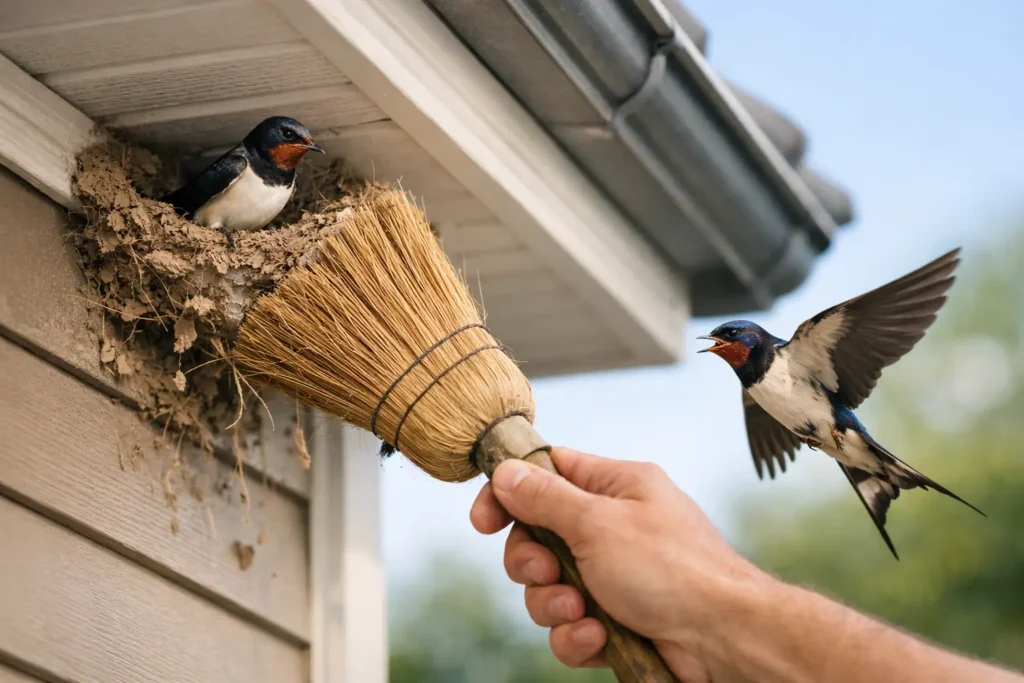
You usually notice swallows after the mess starts. Mud clinging to the eaves, droppings on the porch, constant swooping near the front door, and the feeling that a small bird problem is turning into a property maintenance headache. If you are wondering how to stop swallows nesting on your home, the answer is prevention early, timing everything correctly, and using humane bird control that keeps the birds out without harming them.
In mountain communities, swallows are a familiar part of the landscape. They eat insects and play an important role in the local ecosystem. But when they decide your cabin, storefront, garage, or rental property is the perfect nesting site, they can create sanitation issues, stain siding and concrete, and return year after year to the same protected ledges.
Why swallows keep choosing the same spots
Swallows are not random. They look for sheltered overhangs, porch ceilings, beams, carports, garage openings, and covered entryways where wind and rain are limited. If a location worked once, they are likely to try it again the next season.
That repeat behavior is what makes swallow problems frustrating for property owners. You clean everything up, then spring comes around and the birds are back in the exact same place. On homes and commercial buildings in wooded or semi-rural areas, the combination of open flying space, nearby water, and insect activity makes the site even more attractive.
Mud nests also stick aggressively to stucco, wood, stone, and painted surfaces. Once several nests are established, the droppings and nesting debris become more than a cosmetic problem. They can damage finishes, create slipping hazards on walkways, and attract insects.
How to stop swallows nesting before they build
The most effective approach is to act before nests are completed and before eggs are present. Once nesting is active, legal and humane options become more limited.
Start by watching for early scouting behavior. Swallows often fly around eaves and porch lines first, then begin carrying mud and small bits of nesting material. That is the window when prevention works best.
Physical exclusion is usually the strongest long-term solution. Bird netting can block access to covered patios, breezeways, rafters, and loading areas. For smaller ledges and attachment points, angled barriers or other professional-grade deterrents can make the surface unusable without injuring the birds. On some structures, changing the shape of a favored nesting shelf is enough to stop repeat activity.
Visual deterrents alone tend to be unreliable, especially after birds get comfortable. A plastic owl or shiny spinner may work for a day or two, then stop mattering. If you are dealing with persistent swallows, structure-based exclusion is far more dependable than scare tactics.
Timing matters more than most property owners realize
This is where many do-it-yourself efforts go wrong. People wait until a full nest is attached and birds are actively using it, then try to knock it down. Depending on the species and stage of nesting, that can create legal issues as well as a bigger mess.
Swallows are often protected under migratory bird laws. That means active nests with eggs or chicks generally cannot be removed without proper authorization. If you disturb an active protected nest, you can end up with more than a bird control problem.
The practical takeaway is simple. If there are no eggs and no young birds, prevention and nest removal may be possible. If the nest is active, the right move is often to wait until the birds have finished, then clean, sanitize, and immediately install exclusion before they return.
What works on eaves, porches, and garages
Different parts of a property need different solutions. A front porch with a flat ceiling has a different vulnerability than an open garage or a retail overhang.
On eaves and entryways, the goal is to remove the protected ledge or block access to it. Netting is especially effective where swallows have enough room to fly in and attach nests above doors or windows. On beams and decorative trim, low-profile barriers can help if they are installed correctly and matched to the exact surface.
Garages can be trickier because people want ventilation and easy access. If swallows are nesting just inside an open garage door, the issue may be daily access during nesting season. In those cases, behavior changes matter. Keeping doors closed when possible and addressing the nesting shelf early can make a big difference.
For commercial buildings, aesthetics matter along with function. Customers do not want droppings near entrances, and property managers do not want bird control that looks improvised. That is why customized exclusion tends to outperform off-the-shelf gadgets. It solves the problem without making the building look like a patch job.
Nest removal and cleanup need to be done carefully
Even when a nest can legally be removed, cleanup is not just about scraping off mud. Droppings can contain contaminants, and old nesting material can leave behind odor, staining, and residue that encourages future activity.
Surfaces usually need to be cleaned and disinfected, especially around doorways, patios, storefronts, and outdoor gathering areas. If droppings have built up on concrete, railings, or wood trim, a basic rinse often is not enough. The site should be restored as fully as possible so it no longer feels like an established nesting zone.
This is one reason professional bird control can save time and frustration. The real solution is not only removing what is there. It is removing the attraction and closing the access point so the birds do not rebuild in the same place next week.
When DIY swallow control is enough, and when it is not
If you catch the issue very early, a do-it-yourself approach can work. One or two attempted nests under a small overhang may be manageable if you act quickly, confirm the nests are inactive, and install a proper barrier right away.
But repeated swallow activity usually means the property has structural features the birds strongly prefer. At that point, the problem shifts from cleanup to exclusion design. If you have a tall entryway, a vacation rental with recurring spring activity, or a commercial facade where ladders and netting need to be installed safely, professional help is often the better call.
The same applies if you are unsure whether the nest is active or protected. Guessing is a bad strategy with migratory birds. A trained wildlife control specialist can identify the situation, explain what can legally be done, and build a prevention plan that fits the structure.
Humane bird control is the right long-term approach
A lot of property owners ask for a permanent way to keep swallows away forever. The honest answer is that no bird control method changes the fact that your property may still look appealing to them. What works is making key nesting areas inaccessible so they move on to a more suitable site.
That is why humane exclusion is the standard approach. It protects the building, respects the birds, and avoids the cycle of constant nest knockdowns that rarely solves anything. In eco-conscious communities, that balance matters. People want clean, safe homes and businesses, but they also do not want unnecessary harm to native wildlife.
A good swallow control plan accounts for both. It protects porches, walkways, guests, siding, and entry points while recognizing that these birds are part of the local environment.
Preventing the same problem next season
If swallows nested on your property once, put next year on the calendar now. Late winter and early spring are often the best times to inspect eaves, repair surfaces, and install deterrents before birds return.
Look closely at porch beams, garage headers, patio covers, and any sheltered horizontal surface where mud could adhere. If previous nests left marks or residue, clean those areas thoroughly. If droppings stained lower walls or concrete, address that too. Old evidence can encourage new nesting attempts.
For mountain homes, cabins, and rentals that sit vacant part of the week, preseason prevention is especially important. The birds do not care whether you are home. If the site is quiet and protected, they may move in fast.
If you need a humane, property-safe solution, Outbackzack focuses on practical bird control that fits the realities of local homes and businesses in Southern California mountain communities. The goal is simple: stop the nesting cycle, protect the structure, and do it responsibly.
The best time to deal with swallows is before they settle in. Once you see those first scouting flights under the eaves, treat that as your opening move, not a sign to wait and see what happens.