
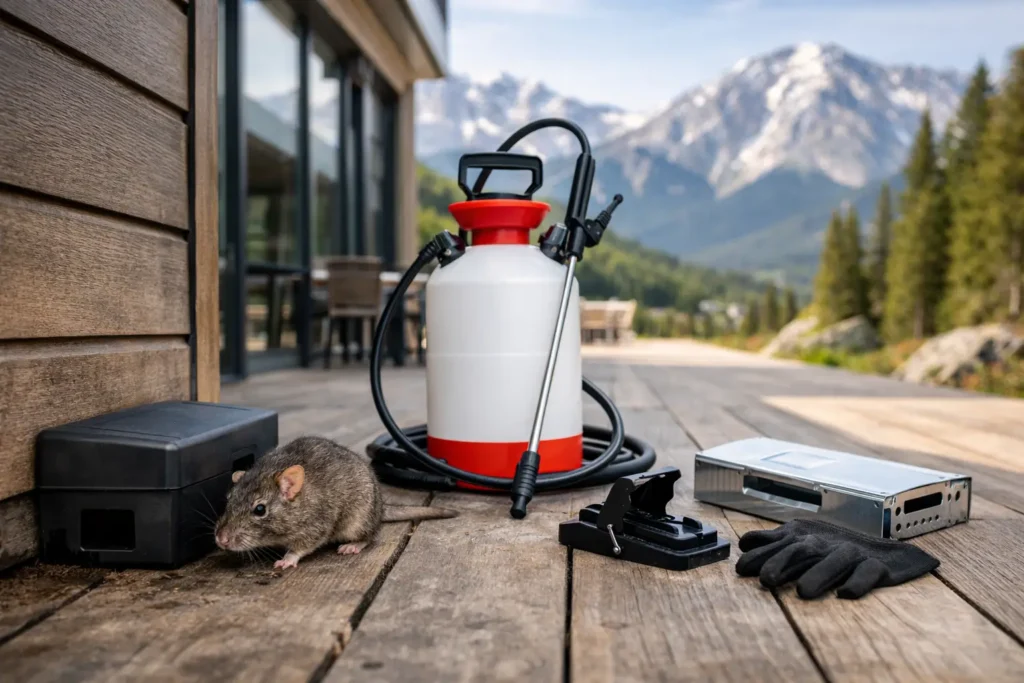
A single mouse sighting behind a restaurant cooler, in a vacation rental pantry, or near a retail stockroom can quickly become a larger sanitation, safety, and reputation problem. This commercial rodent control guide explains how mountain businesses can respond quickly, remove the conditions attracting rodents, and protect the building from repeat activity without relying on a one-time fix.
In Big Bear, Lake Arrowhead, Running Springs, Crestline, and nearby mountain communities, rodent pressure changes with the weather. As temperatures drop, mice and rats look for warm wall voids, reliable food, water, and undisturbed nesting areas. Commercial buildings often provide all four, especially when deliveries, dumpsters, mechanical rooms, and occupied spaces create multiple points of access.
Why Commercial Rodent Problems Need Fast Action
Rodents do more than create an unpleasant impression. They contaminate food and preparation surfaces with droppings and urine, damage insulation and stored inventory, chew wiring, and spread nesting material through hard-to-reach areas. For property managers, the issue can affect tenant satisfaction and lease renewals. For restaurants, lodging operators, markets, and healthcare-related facilities, it can create serious sanitation concerns.
The first rodent seen is rarely the full picture. Mice can travel through openings as small as a dime, while rats exploit damaged vents, gaps around utility lines, poorly sealed loading doors, and crawlspace access points. In wooded and semi-rural communities, nearby vegetation, seasonal snow, construction activity, and neighboring buildings can all shift rodent movement toward your property.
A fast response matters, but speed should not mean scattering traps without a plan. Effective commercial control starts with identifying the species, finding the active travel routes, and determining why the building is accessible in the first place.
Commercial Rodent Control Guide: Start With Inspection
A professional inspection should look beyond the room where droppings were found. Rodents often travel along walls, behind equipment, above ceilings, under decks, and through utility chases before entering occupied areas. The visible evidence may be far from the nesting site or primary entry point.
Inspectors look for fresh droppings, rub marks, gnawing, grease trails, tracks, shredded insulation, nesting material, and odors. They also check exterior conditions such as foundation gaps, roofline openings, damaged screens, open vents, unsealed pipe penetrations, and door sweeps that no longer sit flush with the threshold.
For commercial properties, the inspection should include receiving areas, dumpster pads, storage rooms, break rooms, kitchens, laundry rooms, crawlspaces, attics, maintenance closets, and exterior utility equipment. A cabin rental office may have a different risk profile than a grocery store, but both can have hidden access points that must be addressed.
Identify the Source, Not Just the Sign
A rodent program should answer three questions: Where are rodents entering? What are they using for food, water, or shelter? Where are they nesting or traveling inside the structure?
This distinction is critical. Removing rodents from a wall void while leaving an open foundation vent or a gap around a plumbing line creates a short-term result. Another rodent can use the same route the following night. The goal is to stop the cycle, not simply reduce sightings for a few days.
Remove Food, Water, and Shelter Opportunities
Sanitation is not a substitute for exclusion, but it is a major part of rodent prevention. Rodents are opportunistic. A small spill under shelving, pet food in a maintenance area, birdseed stored in a garage, or trash left near a rear entrance can support ongoing activity.
Food products should be kept in durable sealed containers, including dry goods, employee snacks, and animal feed. Clean behind equipment where crumbs and grease collect, and avoid leaving soiled mop heads, standing water, or leaking plumbing unattended. Dumpster lids should remain closed, and outdoor waste areas need regular cleanup around the base, not just inside the container.
Exterior storage deserves attention as well. Cardboard, unused furniture, stacked lumber, and dense debris close to the building create protected harborages. Keep stored materials elevated where possible and maintain a clear inspection zone along exterior walls. In mountain settings, this can also mean managing brush, woodpiles, and heavy vegetation that provide cover near the structure.
Seal the Building After Active Rodent Removal
Exclusion is the long-term backbone of commercial rodent control. It means closing the openings rodents use while preserving ventilation, drainage, and normal building function. The right method depends on the location of the gap and the material around it.
Common repairs include reinforcing damaged vent screens, sealing gaps around utility penetrations, repairing fascia and soffit damage, installing appropriate door sweeps, closing foundation openings, and securing roofline entry points. Materials must be chosen carefully. Lightweight foam alone may not withstand chewing or weather exposure, while poorly installed screening can create a new maintenance issue.
Timing matters. Sealing every opening before confirming rodents have been removed can trap animals inside walls or ceilings. A trained technician can determine the correct sequence: remove active rodents, monitor activity, then complete targeted block-out repairs that prevent re-entry.
Protect High-Risk Areas
Some commercial spaces need extra attention because they combine warmth, food, and hidden access. Kitchens and food storage areas require frequent monitoring. Mechanical rooms often have pipe and conduit gaps. Laundry facilities provide warmth and lint nesting material. Vacation rentals may sit vacant between guests, giving rodents time to establish activity unnoticed.
Multi-unit properties add another challenge. Rodents can move through shared walls, utility runs, crawlspaces, and attic areas. Treating only the unit where a tenant reports droppings may miss the route connecting the whole building. In these situations, management should coordinate inspections and repairs across the affected areas.
Use Humane, Targeted Removal Methods
Commercial rodent control should protect people, pets, non-target wildlife, and the surrounding mountain environment. That calls for a measured approach based on the property, the level of activity, and the areas involved.
Targeted trapping and controlled removal may be appropriate when activity is active inside a structure. Placement matters more than quantity. Devices should be positioned along established travel routes and secured where employees, guests, children, or pets cannot access them. In sensitive settings, an experienced technician can select methods that minimize risk while addressing the actual infestation.
Broad, unmanaged poison use can create avoidable concerns. Rodents may die in inaccessible walls, creating odor issues, and secondary exposure can threaten wildlife and pets. It also fails to solve structural entry points. An eco-conscious program puts inspection, removal, sanitation, and exclusion ahead of indiscriminate chemical use.
Outbackzack approaches nuisance animal and rodent issues with this practical balance: firm action to protect the property, humane methods where appropriate, and repairs that make the building less inviting after removal is complete.
Clean Up Contamination Safely
Droppings, urine, nesting material, and carcasses should be handled as a health concern, not swept up casually by staff. Dry sweeping or vacuuming can disturb contaminated particles. Restrict access to affected areas, use appropriate protective equipment, and have contaminated materials removed and surfaces disinfected using safe procedures.
Cleanup should also include assessing damaged insulation, contaminated storage areas, and odors that could signal hidden activity. If rodents accessed an attic, crawlspace, kitchen void, or HVAC-adjacent area, the cleanup plan may need to go beyond visible droppings. Proper sanitation protects employees and guests while also removing scent cues that can attract additional rodents.
Build a Seasonal Prevention Schedule
Commercial rodent prevention works best as a routine, not an emergency-only service. Mountain properties should be checked before colder weather drives rodents indoors and again after winter, when weather damage may reveal new gaps around roofs, vents, doors, and foundations.
Managers can assign staff to watch for fresh droppings, gnaw marks, chewed packaging, unusual odors, or repeated sightings. Those observations should be logged with the date and location. A clear record helps identify whether activity is isolated, recurring, or moving through a particular section of the building.
Professional follow-up is especially valuable for older structures, seasonal businesses, restaurants, lodging properties, and facilities near forested areas. The needed frequency depends on the building’s condition, nearby habitat, food handling practices, and history of rodent activity. A property with repeated winter intrusion may need more frequent inspections than a well-sealed office with limited food sources.
When a rodent problem appears, act before staff or customers are forced to manage it themselves. A careful inspection, targeted humane removal, sanitation, and durable exclusion work give your business the protection it needs while respecting the wildlife that belongs outside, not inside your building.