
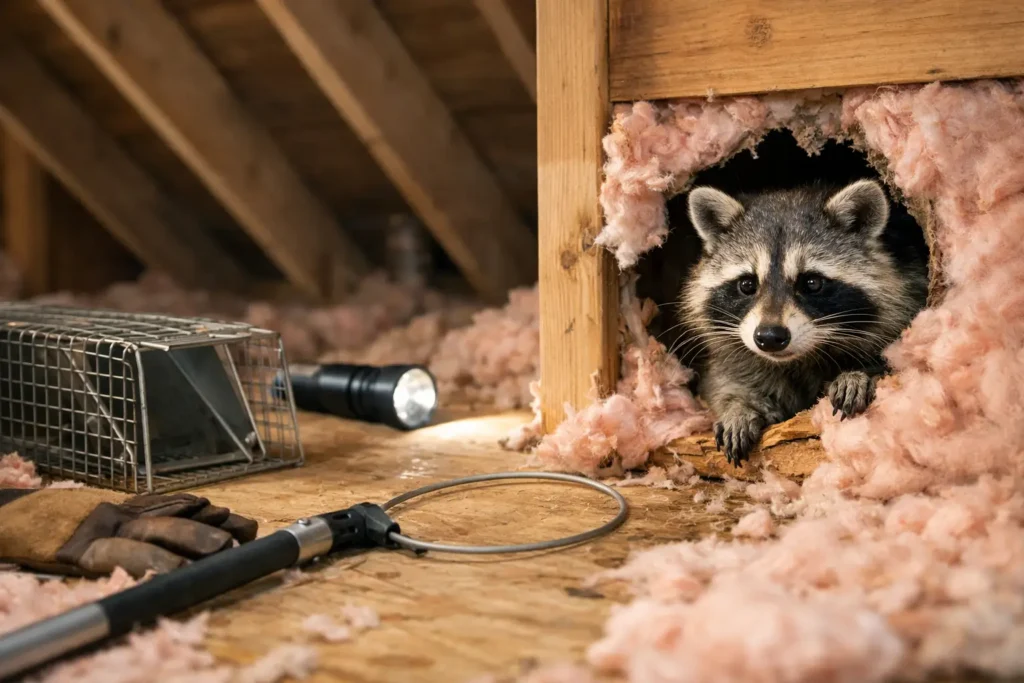
A raccoon in the attic is not a minor noise problem. It can tear insulation apart, damage wiring and ductwork, contaminate stored belongings, and turn a small opening near the roofline into a repeat entry point. Knowing how to remove attic raccoons safely means protecting your home without separating a mother from her young or creating a bigger wildlife problem outside.
For homes, cabins, and vacation rentals in Big Bear, Lake Arrowhead, Running Springs, Crestline, and nearby mountain communities, raccoon activity often rises when animals look for warm, dry shelter. Attics, crawlspaces, chimney chases, and gaps under eaves provide exactly that. The right response is humane removal followed by thorough exclusion and cleanup.
Confirm That You Have Raccoons in the Attic
Raccoons are heavier and louder than squirrels, rats, or mice. Homeowners commonly hear slow walking, thumping, scratching, or objects shifting overhead after dark. Their movement can sound surprisingly similar to a person moving around in the attic.
Other signs include large droppings, a strong urine odor, torn roof vents, pulled-back soffits, disturbed insulation, and muddy paw prints near downspouts, roof edges, or attic access points. A raccoon may also leave oily rub marks around a repeatedly used opening.
Do not enter a tight attic space just to investigate if you suspect an animal is inside. Raccoons can become defensive when cornered, especially if they have kits nearby. Their droppings can also carry harmful bacteria and parasites. A professional inspection can identify the species, find every active entry point, and determine whether young are present before any exclusion work begins.
How to Remove Attic Raccoons Humanely
The safest approach depends on the season, the raccoon’s behavior, and whether the attic is being used as a den. Simply trapping an adult and sealing the hole may sound straightforward, but it can leave dependent kits behind. That can lead to distressed animals in the walls, odor issues, and damage as the mother tries to get back inside.
Start With a Full Exterior Inspection
A humane removal plan begins outside the home. Inspectors look closely at roof vents, gable vents, soffits, fascia boards, loose siding, chimney caps, attic fans, plumbing penetrations, and gaps where rooflines meet. Raccoons are strong, capable climbers and can enlarge weak openings that seem too small at first glance.
The goal is to locate the primary entry point and any secondary openings. If multiple access points are left untreated, a raccoon may simply move from one section of the attic to another or return after removal.
Check for Babies Before Exclusion
In Southern California mountain areas, raccoon breeding and denning patterns can vary with weather and food availability. A female may use an attic as a maternity den, and young raccoons may not be able to follow her out for several weeks.
If kits are present, removal must be handled with extra care. A wildlife professional can use appropriate methods to reunite the mother and young outdoors when possible. This is more responsible than trapping first and discovering later that babies remain inside the structure.
Use One-Way Exclusion When Appropriate
When there are no dependent young in the attic, a one-way exclusion device is often the most effective humane solution. It allows the raccoon to leave through its established route but prevents it from getting back in. The device needs to be installed correctly at the active opening, while all other possible entry points are secured.
This method is not right for every situation. If a raccoon is injured, trapped in an interior living area, or has young inside, a different approach may be required. Timing also matters. Installing exclusion devices too early in the evening can leave an animal inside, while sealing too soon can trap one in the attic.
Avoid Poison, DIY Relocation, and Blocking Holes Too Soon
Poisons are not a humane or practical answer to raccoon problems. They can harm pets, protected wildlife, and scavenging animals, and they may leave a dead animal in an inaccessible area of the home.
DIY trapping can create legal, safety, and animal welfare concerns. Raccoons can bite or scratch when frightened, and relocation rules vary by location. Relocating an animal also does not solve the opening that allowed it into the building in the first place.
Most importantly, never seal an attic hole while you are not certain the animal has left. A trapped raccoon can cause extensive damage trying to escape, and a trapped mother may be separated from her kits.
Protect Your Family During an Attic Raccoon Problem
Keep people and pets away from the attic access area. Do not try to feed the raccoon, chase it with loud noises, smoke it out, or spray chemicals into the attic. These actions can drive wildlife deeper into wall voids or cause it to exit into living spaces.
Raccoon droppings and nesting materials should be treated as contaminated. Avoid sweeping or vacuuming dry droppings, which can stir contaminated dust into the air. If an animal has damaged insulation or left waste in the attic, the space may need professional cleanup and disinfection after removal is complete.
If anyone has direct contact with a raccoon, including a bite or scratch, wash the area immediately and contact a medical professional. A raccoon that is active during the day is not automatically sick, but unusual behavior such as stumbling, circling, paralysis, or extreme aggression deserves urgent professional attention.
Repair the Damage Before Raccoons Return
Removing the raccoon is only half the job. An attic remains vulnerable until every weak point is repaired with materials that can withstand climbing, chewing, and pulling. Thin screening, loose foam, and temporary patches rarely hold up against determined wildlife.
Effective raccoon exclusion may include reinforced vent covers, repaired soffits and fascia, secured chimney caps, sealed gaps around roof penetrations, and repairs to damaged siding or roof edges. The materials should allow proper ventilation while preventing wildlife access.
Property owners should also reduce attractants around the building. Secure trash cans with tight-fitting lids, keep pet food indoors, clean up fallen fruit where applicable, and avoid leaving birdseed or food scraps accessible overnight. In wooded neighborhoods, a raccoon may travel between several properties, so a clean exterior and secure structure work best together.
Clean and Restore the Attic Properly
A raccoon den can leave behind more than visible droppings. Urine can soak into insulation and wood, nesting material may conceal contamination, and damaged ducts or wiring can create additional concerns. Cleanup should happen after the animals are confirmed out and the structure has been sealed.
The scope of restoration depends on how long the animals were inside. A brief visit may require localized sanitation, while an established den may call for removal of contaminated insulation, deodorizing treatment, disinfection, and repair of torn vapor barriers or damaged materials. If wiring was chewed or pulled loose, have it evaluated by a qualified electrician.
This step matters for health, odor control, and future prevention. Lingering scent can attract other wildlife, including new raccoons looking for an easy den site.
When to Call a Professional Raccoon Removal Service
Call for professional help promptly if you hear regular nighttime activity, see visible roof damage, notice large amounts of droppings, suspect babies are present, or have a raccoon inside a wall or living area. The longer an animal remains in the attic, the greater the chance of structural damage and contamination.
A local wildlife removal specialist should provide more than a trap. Look for an inspection-based service that can identify the entry route, use humane removal methods, perform block-out repairs, and handle cleanup and disinfection. For mountain properties, local knowledge matters because snow loads, steep roofs, cabins left vacant between visits, and dense tree cover can all affect how raccoons access a structure.
Outbackzack approaches nuisance wildlife removal with that full-property mindset: solve the immediate raccoon issue, protect the animals through humane practices, and close the conditions that allowed the problem to start.
A quiet attic after removal is a good sign, but a secure, cleaned, and properly repaired attic is the real peace of mind. Acting early gives you the best chance to protect your home, your family, and the wildlife that belongs outdoors.