
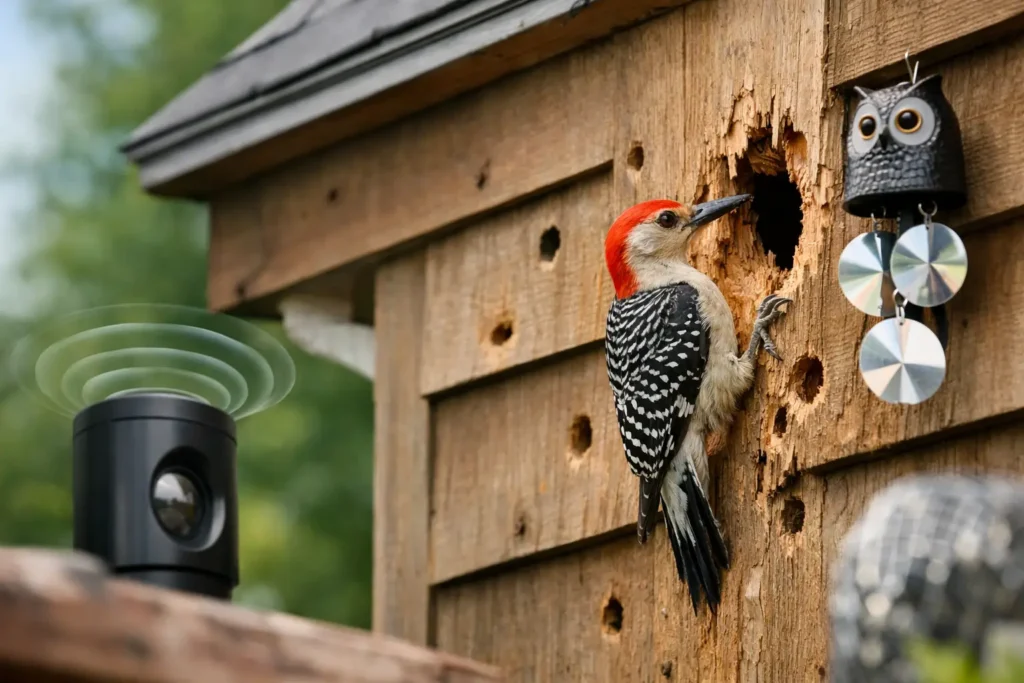
That sharp drumming on the side of a cabin is not just annoying. If you are dealing with repeated pecking on siding, trim, fascia, or eaves, the real question is how to stop woodpecker damage before small holes turn into expensive repairs. In mountain communities, where homes sit close to pines, oaks, and open habitat, woodpecker activity is common. The good news is that you can reduce damage without harming the birds.
Why woodpeckers target houses
Woodpeckers do not attack buildings at random. In most cases, they are after one of three things: food, nesting space, or noise. If insects are living behind wood siding or under trim, a woodpecker may hear or sense movement and start drilling to feed. If the bird is carving out a cavity, the holes tend to be larger and more deliberate. And during spring, some species drum on gutters, chimney caps, vents, or siding because loud surfaces help them mark territory and attract a mate.
This matters because the right fix depends on the reason. If you only patch the hole but leave insects behind, the bird may return. If the issue is territorial drumming, a feeding-related solution will not do much. A good response starts with figuring out what the bird is trying to accomplish.
How to stop woodpecker damage without harming the bird
The most effective approach is a combination of deterrence, repair, and exclusion. One tactic alone may help for a few days, but lasting protection usually takes more than that.
Start with the damaged area
Inspect the siding, trim, corner boards, and eaves closely. Look for round holes, chipped paint, soft wood, staining, insect activity, and droppings below the target area. In mountain homes, moisture damage often makes trim boards softer, and that can make a property more attractive to birds.
If the wood is rotted or hollow, replace it rather than patching over weak material. Seal small openings, repaint exposed areas, and use durable exterior materials where possible. Woodpeckers often revisit familiar spots, so a clean repair with harder surfaces can make a difference.
Address any insect problem
One of the biggest mistakes property owners make is treating woodpecker damage like a bird-only issue. If carpenter bees, ants, beetles, or other insects are present in the wood, the birds are responding to a food source. In that case, bird deterrents may only offer short-term relief.
A proper inspection should check whether the siding or trim is hosting insects. If it is, that underlying problem needs to be corrected at the same time. Otherwise, you are asking a hungry bird to ignore an easy meal.
Use visual deterrents, but move them often
Reflective tape, spinning deterrents, and predator-style visual devices can help, especially when damage first begins. The challenge is that woodpeckers get used to stationary objects quickly. If you hang a deterrent and leave it in one place for weeks, it usually loses effectiveness.
Place visual deterrents close to the target area, not somewhere across the yard. Change their position every few days. This method works best when paired with repair work and exclusion because birds can adapt fast, particularly in quiet wooded neighborhoods where human activity is limited.
Add physical barriers where practical
If a specific wall, beam, or trim section keeps getting hit, a physical barrier is often one of the strongest humane solutions. Bird netting or screening can keep the bird from landing directly on the problem area. The barrier must be installed correctly, with enough distance from the surface so the bird cannot peck through it.
This is especially useful on cabins, vacation rentals, and commercial buildings with repeat activity on the same elevation. It is not always the prettiest solution, so there is a trade-off. Some owners prefer a less visible deterrent, while others would rather stop the damage decisively and worry less about appearance.
What usually does not work for long
A lot of store-bought products promise quick results, but some are unreliable in real conditions.
Noise-makers may work for a short window, then become background sound. Fake owls can help briefly, but only if they are moved often and placed where the woodpecker actually approaches. Sprays and scent repellents are inconsistent because birds rely more on sight, sound, and habit than smell.
Patching holes without changing the conditions around them also tends to fail. If the bird liked that spot once, it may test it again.
Timing matters more than most people think
If you want to know how to stop woodpecker damage effectively, act early. A bird that has just started pecking is easier to redirect than one that has used the same wall for weeks. Once a site becomes part of nesting or territorial behavior, the pattern can be harder to break.
Spring is usually the busiest season for drumming and cavity work, but damage can happen any time of year. In colder mountain areas, homes may also sit vacant for stretches, giving birds more uninterrupted access. That is why second homes and rentals often need extra monitoring.
Be careful during nesting season
This is where the situation gets more sensitive. If a woodpecker has already created an active nest cavity with eggs or young inside, removal options may be limited. Many bird species are protected, and disturbing an active nest can create legal and ethical problems.
That is why inspection matters before any exclusion work begins. Humane bird control is not about taking shortcuts. It is about solving the damage problem while respecting wildlife laws and avoiding unnecessary harm.
Why mountain homes see repeat woodpecker issues
Properties in places like Big Bear Lake, Lake Arrowhead, Running Springs, and Crestline deal with conditions that make woodpecker activity more likely. There is natural habitat nearby, lots of trees, quieter surroundings, and many structures with wood accents, exposed beams, or older siding. Snow, sun, and seasonal moisture can also weaken exterior materials, making them easier to peck.
That combination creates a perfect setup. The bird has habitat, the home offers perch points and soft spots, and long quiet periods make repeated visits easier. So while generic advice can help, local conditions really do matter.
When professional bird control makes sense
If the pecking is ongoing, if the holes are getting larger, or if multiple sections of the building are being targeted, it is usually time for a professional inspection. The same goes for properties with insect issues, hard-to-reach rooflines, or signs of active nesting.
A professional can identify whether the behavior is feeding, drumming, or cavity excavation, then match the solution to the cause. That may include exclusion work, block-out repairs, habitat adjustments, and coordinated prevention that protects the structure without harming the bird.
For property owners who want a humane, eco-conscious approach, this is where experienced wildlife control matters. Outbackzack works with the realities of mountain properties and focuses on stopping the problem while protecting both the building and the surrounding environment.
How to keep woodpeckers from coming back
Long-term prevention is not glamorous, but it is what saves money. Keep exterior paint and sealant in good shape. Replace rotted trim promptly. Check eaves, fascia, and siding for soft spots after winter weather. Watch for insect activity before it spreads. And if a wall has been targeted before, monitor it early in spring rather than waiting for fresh holes to appear.
It also helps to reduce easy landing and drumming spots where possible. Metal chimney caps, loose flashing, and hollow exterior features can attract attention because they amplify sound. In some cases, a small repair can remove the exact feature the bird finds useful.
There is no single trick that works for every property. Some homes need simple deterrents and repair. Others need exclusion, insect treatment, and more durable exterior upgrades. The key is to respond quickly, use humane methods, and avoid letting repeat behavior become established.
If a woodpecker has chosen your house, the goal is not to punish the bird. It is to make your structure a poor target and a protected one.