
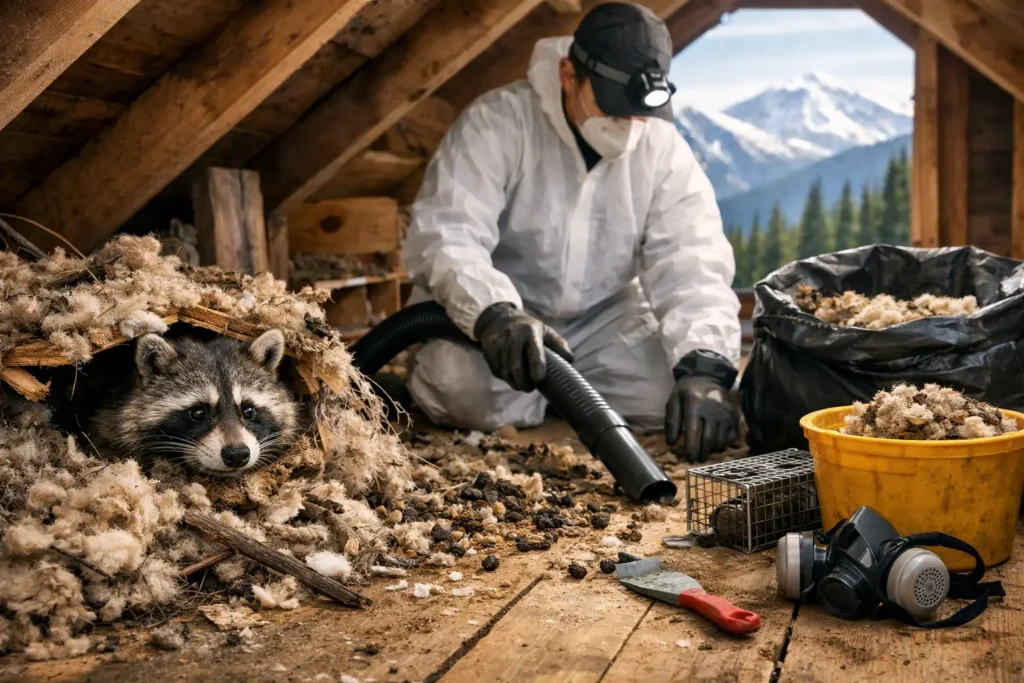
That sharp, sour smell in the attic is usually the first clue. Then come the scratching sounds at night, stained insulation, or droppings near the hatch. If you need an attic wildlife cleanup guide, the most important thing to know is this: cleanup is not just about making the space look better. It is about removing contamination, stopping odor trails, and protecting your home from the next round of animal activity.
In mountain communities like Big Bear, Lake Arrowhead, Running Springs, and Crestline, attic intrusions are common because homes sit close to trees, open crawl spaces, sheds, and natural food sources. Squirrels, rats, mice, raccoons, bats, and birds do not need much space to get in. Once they settle, they leave behind urine, droppings, nesting material, parasites, and damaged insulation. That mix can create real health and structural problems if it is handled the wrong way.
What an attic wildlife cleanup guide should cover
A proper attic wildlife cleanup guide starts after the animals are out, not before. This is where many property owners get stuck. They hear the noise stop and assume the problem is over. In reality, the contamination remains, and so do the scent markers that can attract new wildlife to the same entry points.
The right cleanup process has three goals. First, remove the biohazard material safely. Second, sanitize the affected areas without spreading contamination through the home. Third, repair and seal vulnerable access points so cleanup dollars are not wasted on a repeat infestation.
This is especially important in cabins, vacation rentals, and second homes that may sit empty for part of the year. An attic can hold months of buildup before anyone notices. By then, cleanup may involve far more than a quick sweep and a deodorizer.
Why attic wildlife mess is more serious than it looks
Wildlife contamination is rarely limited to what you can see from the attic hatch. Droppings may be concentrated in one corner, but urine can soak into insulation, wood framing, and drywall. Nesting debris can get pushed into vents or soffit gaps. Rodents and squirrels may chew wiring. Raccoons can crush insulation and contaminate wide sections of the attic as they travel.
There is also the health side. Disturbed droppings can release particles into the air. Parasites such as fleas, mites, or ticks may remain in nesting areas after the animal is gone. If bats or rodents have been present for a while, cleanup needs a much more controlled approach than a household vacuum and a dust mask.
That is where a lot of do-it-yourself efforts go wrong. Dry sweeping or vacuuming contaminated droppings can spread material into the air and into living spaces below. Spraying harsh chemicals on top of waste without first removing it can also create a bigger mess and may not solve the odor issue.
Step one: make sure the animals are actually gone
Before any cleanup starts, the attic has to be checked for active wildlife. This sounds obvious, but it gets missed all the time. Homeowners may remove visible droppings only to discover that young raccoons, nesting squirrels, or roosting bats are still inside.
Humane removal matters here. The goal is to solve the conflict without trapping animals inside walls, separating mothers from young, or creating a new odor problem from a dead animal in the structure. Depending on the species, timing also matters. Some removals should not happen during active maternity periods, and that is one reason local experience counts in mountain areas where seasonal wildlife patterns are predictable.
If there is still scratching, chirping, fluttering, or fresh droppings, cleanup should wait until removal and exclusion are complete.
Step two: use the right protective approach
Attic cleanup is dirty work, but the bigger issue is exposure. Anyone entering a contaminated attic should treat it as a controlled cleanup zone, not a general home repair task. Protective clothing, gloves, respiratory protection, and proper containment methods are part of doing the job safely.
The amount of protection needed depends on the species and how long the activity has been going on. A few mouse droppings near one entry point is different from a long-term raccoon den or a bat roost with heavy accumulation. That is why every cleanup plan should be based on inspection, not guesswork.
In many cases, insulation should be assumed contaminated if urine odor is strong, droppings are widespread, or nesting material is embedded throughout the attic. Spot cleaning only works when the affected area is truly limited.
Step three: remove droppings, nesting material, and ruined insulation
The physical removal phase is where the real restoration begins. All droppings, food caches, feathers, fur, nesting debris, and visibly affected insulation need to come out. This is also the stage where technicians look for hidden damage to ductwork, framing, wiring, and vent screens.
There is no single rule for how much material must be removed. It depends on contamination level, species, and whether odor has penetrated the insulation and wood. Sometimes a focused cleanup solves the issue. In heavier infestations, partial or full insulation removal is the better investment because it addresses the source instead of masking it.
Mountain homes often have attics with irregular rooflines, low clearances, and older construction details that make cleanup harder than it looks. A tight cabin attic with exposed rafters and multiple soffit voids can hold contamination in places a homeowner cannot safely reach.
Step four: sanitize without creating a bigger problem
Once contaminated material is removed, the surfaces need to be treated with disinfecting and odor-control products designed for wildlife cleanup. The point is not to flood the attic with chemicals. The point is to reduce pathogens, neutralize odor sources, and make the area less attractive to future intruders.
Eco-conscious methods matter here. Strong chemical smell is not the same thing as a clean attic, and overapplication can create indoor air concerns of its own. A responsible cleanup uses targeted treatment, proper dwell time, and product choices that protect people, pets, and the surrounding environment.
Odor treatment can take more than one pass. If urine has deeply soaked wood or drywall, full odor removal may depend on how much material was contaminated and whether damaged sections need repair or replacement.
Step five: seal entry points and repair the damage
A clean attic that is still open to wildlife is just a reset button for the next infestation. Exclusion is what turns cleanup into a long-term solution. That means identifying how the animals entered and closing those routes with durable materials, not temporary patch jobs.
Common access points in mountain properties include roof returns, gable vents, construction gaps, lifted shingles, eave intersections, uncapped vents, and damaged fascia. Rodents may only need a small gap. Raccoons and squirrels often exploit larger weak points around roofing edges or attic vents.
This is where service quality really shows. Humane wildlife work is not just removal. It includes block-out repairs and rodent proofing that match the structure, the species pressure, and the local environment. A repair that holds up in a suburban tract home may fail fast in a snowy, wooded mountain setting.
When cleanup is a DIY task and when it is not
Some homeowners can handle a very minor issue, such as a small amount of fresh rodent droppings near a recently identified gap. But once contamination is widespread, odor is strong, insulation is affected, or larger wildlife has been involved, professional cleanup is usually the safer route.
The trade-off is simple. DIY may save money upfront, but incomplete cleanup often leaves behind odor, parasites, and hidden waste. It can also miss the exclusion work that keeps the problem from returning. Professional service costs more at the start, but it usually addresses removal, sanitation, and prevention as one coordinated job.
For rental properties and commercial buildings, professional documentation and thorough remediation also matter from a liability and tenant-safety standpoint.
A local attic wildlife cleanup guide for prevention
After cleanup, prevention becomes the priority. Trees should be trimmed back from rooflines where possible. Food sources such as unsecured trash, pet food, and bird seed should be managed carefully. Rooflines, vents, and eaves should be inspected before winter and after storms, when damage often opens new access points.
In high-altitude communities, seasonal shifts change wildlife behavior. Cold weather can drive animals toward warm attics, while spring brings nesting activity. Homes that sit vacant between visits are especially vulnerable because early warning signs go unnoticed. Scheduling inspections before peak seasonal pressure can prevent major cleanup costs later.
Outbackzack works with property owners across Southern California mountain communities who need humane removal, safe attic cleanup, and repairs that hold up in real local conditions. That local knowledge matters when you are dealing with recurring wildlife pressure instead of a one-time incident.
If your attic smells off, sounds busy at night, or shows signs of droppings and torn insulation, treat it early. The fastest way to protect your home is to remove the contamination, close the access, and make the space clean and secure before wildlife decides it is home again.