
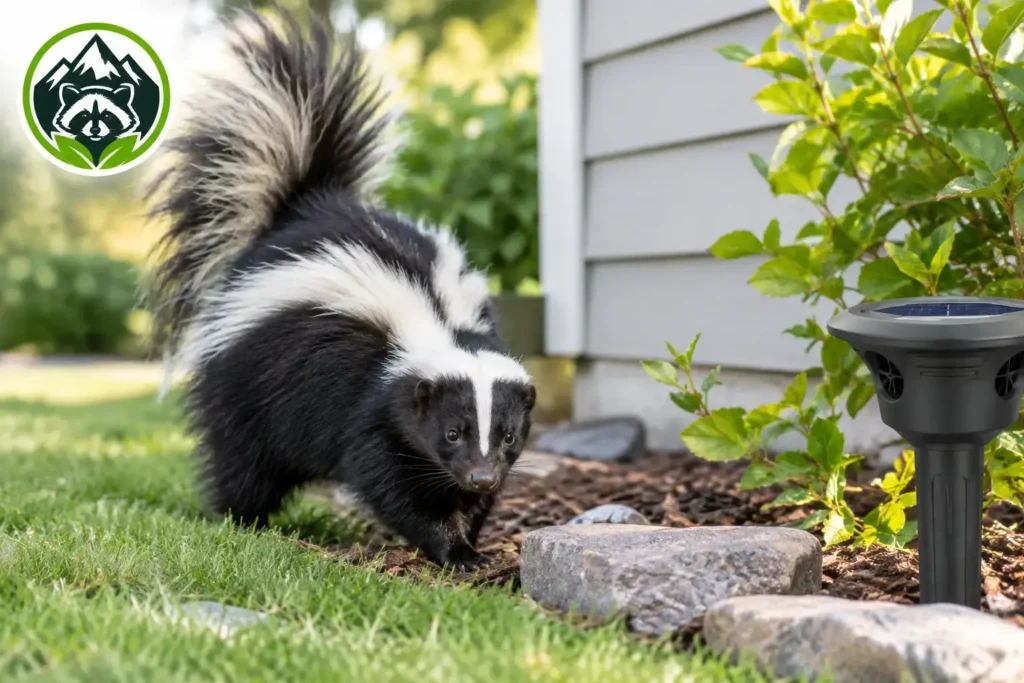
A skunk under the deck can turn a quiet evening at home into a stressful situation fast. The good news is that learning how to deter skunks safely does not require poison, harsh chemicals, or frightening an animal into spraying. The most reliable approach is simple: remove the food and shelter that brought the skunk in, then close access only after you know it has left.
For homes, cabins, vacation rentals, and commercial properties in mountain communities, skunks often show up because the property offers easy meals and protected spaces beneath sheds, porches, decks, or crawl spaces. Humane prevention protects your building, your pets, and the wildlife that belongs outdoors.
Start by removing what attracts skunks
Skunks are not usually looking for a fight. They are looking for dinner and a dry, quiet place to rest. They eat insects, grubs, fallen fruit, pet food, garbage, birdseed, and sometimes eggs. If a food source is available night after night, a skunk has no reason to move on.
Bring pet food and water bowls inside before dark. This is one of the most effective changes a homeowner can make, especially near wooded lots. If you feed outdoor cats, do so during daylight hours and remove leftover food promptly. Never leave bags of pet food in an unsecured garage, shed, or porch area where animals can smell and reach them.
Garbage also matters. Use sturdy containers with tight-fitting lids, and keep waste stored in a garage or secure enclosure when possible. Rinse food containers before putting them in the trash. If a bin is regularly tipped over, add a wildlife-resistant lid or secure it with a strap designed for trash containers. Avoid leaving compost scraps, grease, or fallen fruit exposed outside.
Bird feeders can create a second food source. Skunks may not be after the birds, but they will gladly eat seed that has fallen to the ground. Use a tray to catch seed, clean up spills regularly, or pause feeding for a short time if skunk activity is frequent near the feeder.
Make your yard less inviting at night
Skunks prefer cover. Dense brush, stacked firewood, overgrown vegetation, open crawl spaces, and low decks give them a place to travel unseen and settle down. You do not need to strip a mountain property bare. You do need to reduce the sheltered pockets closest to the house.
Keep shrubs trimmed so there is open space beneath them, particularly around decks, foundations, sheds, and utility areas. Store firewood in a raised rack rather than directly against the house. Remove loose lumber, old planters, and clutter that creates an easy den site.
Motion-activated lighting can help in areas where skunks travel at night, such as along the side of a garage or near a trash enclosure. Use it thoughtfully. Constant bright lighting can disturb neighbors and other wildlife, while a properly aimed motion light adds a brief, harmless interruption that makes an area feel less comfortable.
A motion-activated sprinkler may also discourage an occasional visitor in warm weather. It is not the right choice during freezing conditions, and it will not solve a denning problem beneath a structure. Think of these tools as support for better sanitation and exclusion, not a substitute for them.
How to deter skunks safely from under a deck or shed
A skunk beneath a deck, porch, shed, or crawl space needs more care than one passing through the yard. The biggest mistake is sealing every opening immediately. If the animal is still inside, it may dig, scratch, or find a way into another part of the structure. If kits are present, separating a mother from her young creates a more serious problem for everyone.
First, identify the entry point and look for signs of activity. Freshly disturbed soil, a shallow burrow, a musky odor, small tracks, and nighttime movement near one opening can all indicate active use. Skunks are most active from dusk through the night, so watch from a safe distance rather than approaching the opening.
If you are confident there are no young animals present, a one-way exclusion door can allow a skunk to leave while preventing it from returning. This work needs the right timing, installation, and monitoring. In spring and early summer especially, skunks may be raising young under structures. A professional inspection is the safest way to determine whether exclusion can proceed.
Once the space is confirmed empty, install a durable barrier around the base of the structure. Hardware cloth or welded wire should extend below ground and bend outward to prevent digging. The material must be secured carefully with no gaps at corners, stairs, or utility penetrations. A loose patch may look finished but gives a determined animal an easy way back in.
Protect pets without escalating the problem
Dogs are most likely to get sprayed because they rush toward unfamiliar animals. Keep pets on a leash after dark, especially near brush, decks, sheds, and garbage areas. Before letting a dog into the yard at night, turn on exterior lights and scan the area.
If you see a skunk, do not run toward it, corner it, throw objects, or try to scare it away with a hose. Back up slowly and give it a clear path to leave. A skunk usually gives warning signs before spraying, including stomping, turning its back, lifting its tail, or facing you with a raised posture. Respect that warning and create distance.
If your pet has been sprayed, keep it outside or in a contained area until you can clean it safely. Avoid bringing a heavily sprayed pet through the home. Wear gloves, protect the animal’s eyes, and call a veterinarian if spray gets into the eyes or if your pet has been bitten or scratched.
Avoid repellents that create bigger risks
There is no safe shortcut that works in every situation. Mothballs, bleach, ammonia, gasoline, poison, and homemade chemical mixtures should never be used to drive skunks away. These methods can harm children, pets, wildlife, soil, and groundwater. They can also create fumes, fire hazards, or legal problems.
Many strong-smelling products promise to repel wildlife, but results are inconsistent because skunks may tolerate unpleasant odors when a reliable den or food source is nearby. Ultrasonic devices can have similarly mixed results, particularly on large or wooded properties where sound is blocked by landscaping and structures.
The trade-off is straightforward: temporary deterrents may help with a wandering skunk, but physical prevention and removal of attractants provide more dependable long-term protection. If you find repeated digging in lawn areas, the property may also have grubs or other insects beneath the turf. Treating the underlying food source with an eco-conscious pest management plan can reduce the reason skunks are visiting.
Know when to call a humane wildlife professional
Call for help when a skunk is living under a structure, entering a garage or crawl space, repeatedly damaging the lawn, or showing unusual behavior. A skunk that is active in daylight is not automatically sick, but it deserves caution. Daytime activity can occur when a mother is feeding young or when an animal has been disturbed. However, staggering, circling, aggression without provocation, paralysis, or disorientation should be treated as a safety concern. Keep people and pets away and contact local animal control or a qualified wildlife professional.
Professional service is also the right choice when you cannot confirm whether babies are present, when access points are difficult to reach, or when an odor suggests an animal may be trapped inside a building. Humane removal should include inspection, safe exclusion, cleanup when needed, and repairs that keep another animal from moving in after the first one leaves.
For property owners in Big Bear Lake, Lake Arrowhead, Running Springs, Crestline, and nearby mountain communities, local conditions can make prevention more complicated. Seasonal cabins may sit empty, decks often have deep sheltered voids, and wooded lots create steady wildlife traffic. Outbackzack approaches skunk issues without poison or harmful products, focusing on humane removal, block-out work, and practical prevention that protects the property over time.
A skunk does not have to become a permanent neighbor or a crisis. Give it room to leave, remove the reasons it stayed, and secure the space only when it is safe to do so. That approach is better for your home, your pets, and the animal trying to find its way back outdoors.