
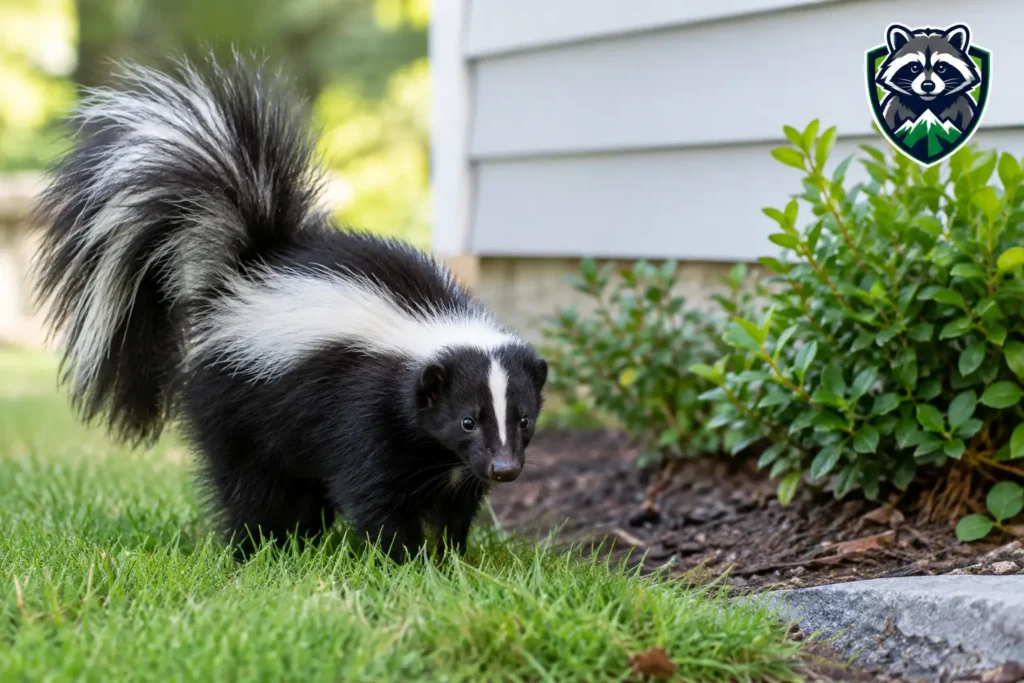
A skunk under a deck or moving through the yard at dusk can make any homeowner uneasy, especially when pets and children use the same space. Are skunks dangerous near homes? Usually, they are more of a nuisance than an aggressive threat. Still, a skunk living close to a house can create real concerns involving spray, pet encounters, possible disease exposure, and damage to vulnerable areas beneath buildings.
The safest response is not to chase, poison, or trap a skunk without a plan. Skunks are wildlife, and they are usually trying to find shelter, food, or a quiet place to raise young. Humane removal and prevention protect your property while treating the animal responsibly.
Are Skunks Dangerous Near Homes?
Skunks are not naturally confrontational. Their first choice is almost always to avoid people, and they tend to be active at night when yards are quiet. A skunk that sees a person often freezes, turns away, or slowly retreats.
The danger increases when a skunk feels cornered, is surprised at close range, or is defending a den. Before spraying, a skunk may stomp its front feet, raise its tail, turn its back, or make a short warning charge. Those signals are your cue to back away calmly and give it a clear escape route.
For homeowners, the most common problems are not bites or attacks. They are spray incidents, conflicts with dogs, denning beneath structures, and the chance of contact with parasites or diseases. A skunk can also attract attention from pets that do not recognize its warning behavior until it is too late.
The risk to dogs and cats
Dogs are the most frequent victims of skunk spray because they are curious and fast to approach. The odor can linger on fur, collars, bedding, furniture, and even inside a vehicle after a ride home. Spray can cause temporary eye irritation, watering, and discomfort if it gets directly into a pet’s face.
Keep pets on a leash after dark if skunk activity is suspected. Before letting a dog into the yard, turn on exterior lights and scan around decks, sheds, woodpiles, and low shrubs. Do not send a dog outside to scare a skunk away. That plan commonly ends with a sprayed pet and a skunk that becomes more reluctant to leave the area.
Cats may also be sprayed, though outdoor cats can have other risks around wildlife. If a pet has been bitten, scratched, or had direct contact with a skunk, contact a veterinarian promptly. Do not assume a small wound is harmless.
Disease concerns deserve caution, not panic
Skunks can carry rabies, although not every skunk has it. The concern is serious because rabies is fatal once symptoms appear, but it is not a reason to treat every skunk as diseased or dangerous. Avoiding direct contact is the practical protection.
A healthy skunk may move slowly and appear unconcerned when crossing a yard at night. More concerning behavior includes unusual daytime activity, stumbling, circling, paralysis, aggression without provocation, or a skunk that seems unable to move away. These signs can have several causes, including injury, but they should be handled by trained wildlife professionals rather than a homeowner.
Never touch a dead or injured skunk with bare hands. Keep children and pets away, and do not try to nurse, relocate, or dispose of the animal yourself. Local wildlife and public health rules may also apply.
Why Skunks Settle Near Houses
A home offers exactly what a skunk needs: cover, easy food, and calm places to rest. In mountain communities, cabins, crawl spaces, decks, and sheds can be especially attractive when temperatures drop or natural shelter is limited.
A female skunk may choose a protected area beneath a porch, deck, addition, or raised foundation as a denning site. This is particularly common during spring and early summer, when young kits are too small to travel far. Blocking an opening while a mother and young are still inside can create a bigger problem. Animals may become trapped, odors may develop, and the mother may damage materials trying to return to her young.
Food sources matter just as much. Open garbage, fallen fruit, pet food left outdoors, accessible compost, birdseed, and grubs in a watered lawn can keep skunks returning night after night. Even a clean-looking property may have an easy entry point beneath a structure that makes it worth revisiting.
Signs a Skunk May Be Living on Your Property
The smell of skunk spray is obvious, but a denning skunk may not spray at all unless disturbed. Watch for a recurring musky odor near one section of the house, shallow holes in the lawn where skunks search for insects, or a dark, low-bodied animal entering the same opening after sunset.
Look carefully around decks, crawl-space vents, sheds, stairways, and utility openings. Fresh soil, displaced leaves, tracks, or a worn path leading under a structure can point to regular activity. Skunks may also leave droppings near a den, though droppings alone should not be used to identify the animal. Raccoons, rodents, and other wildlife can use similar areas.
Avoid poking into an opening or shining a bright light directly inside. A frightened skunk may spray, and a den may contain young that should not be separated from their mother.
What to Do When You See a Skunk
If a skunk is simply passing through the yard, the best action is usually no action. Let it continue on its way. Keep your distance, bring pets indoors, and wait until it has left before walking through the area.
If it is returning regularly or appears to be living beneath a structure, remove easy food sources while arranging a professional inspection. Secure trash cans, feed pets indoors, clean up fallen fruit, and avoid leaving birdseed on the ground. These changes reduce the reward without forcing a confrontation.
Do not use poison, smoke, flooding, mothballs, or homemade repellents. These approaches can harm wildlife, pets, and the environment, and they may drive an animal deeper into a wall, crawl space, or inaccessible part of the property. Relocating wildlife without proper assessment can also separate mothers from young or move the problem to another neighborhood.
Humane Skunk Removal Requires Timing
Effective skunk control is more than setting a trap. A trained wildlife professional first identifies where the skunk is entering, whether a den is active, and whether young may be present. The removal approach should match the season, the structure, and the animal’s behavior.
After the skunk has safely left, exclusion work prevents the same problem from returning. This may include securing gaps beneath decks, repairing damaged vent screens, reinforcing crawl-space access points, and installing appropriately designed barriers around vulnerable areas. The goal is to keep wildlife out without trapping it inside.
Cleanup also matters. Denning areas can hold droppings, nesting debris, and odors that encourage other animals to investigate. Humane wildlife removal should include practical advice on sanitation and repairs, not just a short-term removal visit.
For homes in Big Bear Lake, Lake Arrowhead, Crestline, and nearby mountain communities, local conditions can make this work more complex. Snow, sloped lots, seasonal cabins, crawl spaces, and heavily wooded surroundings all affect how wildlife finds access. Outbackzack approaches skunk issues with humane removal and property-focused exclusion rather than harmful products or unnecessary wildlife harm.
When to Call for Help
Call a wildlife removal specialist when a skunk is under your home, inside a shed or garage, repeatedly visiting the same location, showing abnormal behavior, or has sprayed a pet. Fast attention is especially useful if you notice activity around a crawl space or deck, where a small access point can become a long-term den.
A professional can determine whether removal needs to wait for young to become mobile, identify the access route, and recommend durable repairs. That prevents rushed decisions that can leave animals trapped or allow the next skunk to move in.
A skunk near the home does not have to become a crisis. Give it space, protect pets, remove attractants, and address den sites with a humane plan that keeps both your property and local wildlife safer.