A bird flying through a warehouse is not a minor inconvenience. One open loading-bay door can lead to droppings on inventory, nesting in rafters, damaged insulation, and safety concerns below. The right warehouse bird deterrent does more than chase birds away for a day. It prevents access, removes nesting pressure, and protects the people and products inside without harming wildlife.
For facilities in mountain and foothill communities, bird activity can rise quickly around warehouses, storage buildings, workshops, and distribution areas. Pigeons, sparrows, and swallows often find warmth, shelter, food scraps, and elevated nesting locations that are difficult for staff to reach. A humane response starts with identifying why the birds chose the building in the first place.
Why Birds Settle Inside Warehouses
Warehouses offer birds something they rarely find outdoors: dependable cover from weather, high perches away from predators, and repeated access through loading areas. A bird may enter while a door is open, then return because the space feels safe. Once nesting material or droppings accumulate, other birds may follow.
Food is another common driver. Open trash containers, uncovered pet food or employee break-area waste, spilled grain, and standing water can turn the exterior of a facility into a feeding spot. Birds do not need much encouragement. If food is available near a roofline or loading dock, they may begin perching on ledges and working their way inside.
The problem is not limited to visible birds on the floor. Many infestations start above the work area. Rafters, steel beams, vents, dock canopies, roof voids, and signs provide protected locations where birds can roost unnoticed. By the time employees see regular droppings below, the birds may already have an established pattern.
The Risks of Ignoring Warehouse Bird Activity
Bird droppings are corrosive and can damage metal surfaces, equipment, painted finishes, and building materials over time. They also create slipping hazards when they collect on walkways, loading areas, stairs, and equipment. In a busy commercial setting, that exposure can affect employee safety and daily operations.
Contamination is equally serious. Droppings, feathers, nesting material, and parasites can compromise stored goods, packaging, and work surfaces. Facilities that handle food, feed, medical supplies, or sensitive inventory need especially prompt action. Even in a general storage warehouse, visible bird waste can create sanitation issues and a poor impression for customers, vendors, and inspectors.
Bird nests can also obstruct vents, drainage areas, and mechanical equipment. A blocked vent or gutter may seem separate from bird control, but it can lead to moisture problems, reduced ventilation, or costly maintenance work. The longer birds are allowed to return, the more difficult and expensive cleanup and prevention can become.
A Warehouse Bird Deterrent Should Start With Inspection
The most effective bird control plan is built around the species, the entry points, and the birds’ daily behavior. A solution that works for pigeons roosting on a roof ledge may not solve a swallow nest under a canopy or sparrows entering through a damaged vent.
A professional inspection should look at access points, rooflines, loading doors, vents, damaged siding, utility penetrations, interior rafters, and areas where water or food may be available. It should also identify active nests and determine whether young birds are present. Many bird species have legal protections, especially when nesting, so timing and humane handling matter.
This is why random store-bought repellents often disappoint. If a building has a wide opening above a dock door, a sound device or visual scare item cannot close that gap. Birds may avoid it briefly, then adjust. Physical prevention is usually more dependable because it changes the access birds rely on.
Humane Bird Deterrent Options for Warehouses
No single product is right for every facility. The best approach usually combines exclusion, habitat changes, and targeted deterrents based on where birds are landing, nesting, or entering.
Exclusion Netting and Structural Screening
Bird netting is often one of the most reliable options for large open areas, rafters, loading canopies, and covered structures. Properly installed netting blocks access to roosting and nesting locations while allowing the facility to remain functional. Screening can also secure vents, gaps beneath eaves, and openings around utility lines.
The key word is properly. Loose, damaged, or poorly fitted netting can create hazards for birds and fail to keep them out. Humane exclusion work requires the area to be inspected first and active birds to be addressed before an opening is sealed.
Door Management and Loading Dock Protection
Loading docks are frequent entry points because doors may remain open for long periods. Strip curtains, air curtains, dock seals, and better door-closing procedures can reduce opportunities for birds to fly inside. The right choice depends on traffic volume, equipment clearance, temperature needs, and the size of the opening.
For some operations, it is not realistic to keep doors closed continuously. In those cases, a combination of physical barriers and consistent staff procedures is more practical than relying on a single deterrent. The goal is to make entry less convenient without slowing down essential warehouse work.
Ledge and Perch Modification
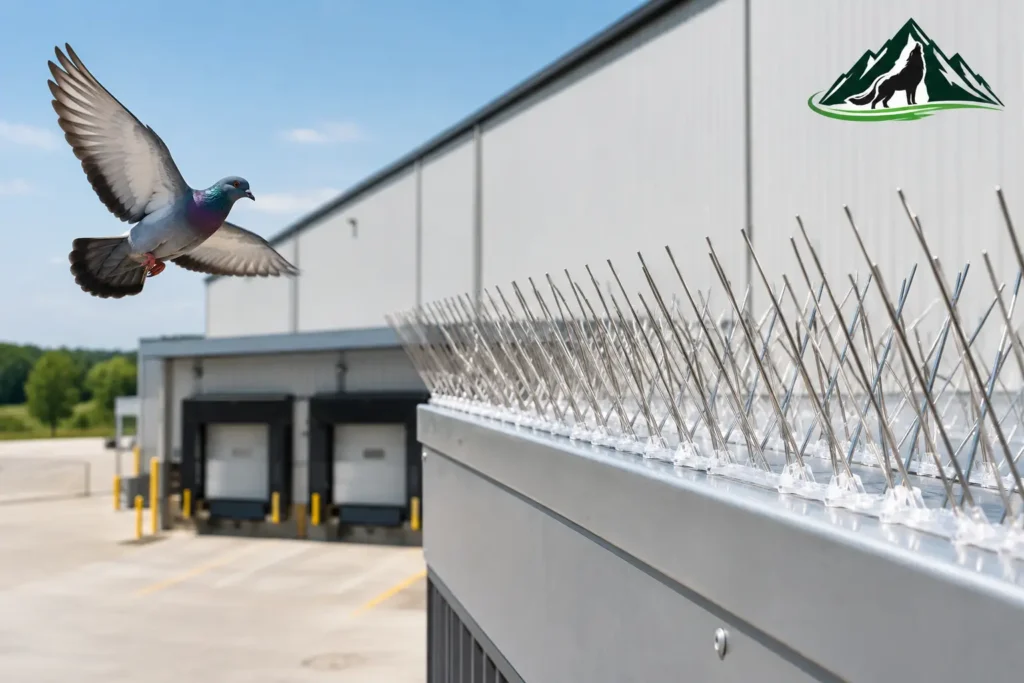
Birds often return to the same beams, signs, roof edges, and exterior ledges. Physical perch deterrents can discourage landing in these targeted spots. These measures must be selected carefully and installed where they will not create maintenance issues or interfere with workers, equipment, or roof access.
It is also worth addressing nearby perching locations. If birds are pushed from one ledge but a protected beam five feet away remains available, the issue may simply move. A complete plan considers the full roosting route around the building.
Food, Water, and Waste Control
Good sanitation supports every bird control effort. Keep dumpsters closed, clean spills quickly, remove standing water where possible, and avoid leaving food waste near docks or exterior break areas. These steps will not remove established birds on their own, but they reduce the reasons birds keep returning.
Inside the warehouse, remove nesting material and droppings only with appropriate safety practices. Disturbing dry droppings can release dust into the air. Cleanup should be handled with protective equipment, controlled removal methods, and disinfection suited to the affected surfaces.
What Not to Rely On
Poison has no place in a humane warehouse bird control plan. It can harm non-target wildlife, create contamination concerns, and leave property owners dealing with dead or injured animals in inaccessible areas. Outbackzack uses humane, eco-friendly solutions that protect property without using harmful products.
Visual scare devices, reflective objects, and noise-based products can have limited short-term value in certain exterior situations, but birds often become accustomed to them. They are best treated as a supporting measure, not the foundation of a prevention plan. The same is true of odor repellents, which may be inconsistent in large, ventilated industrial spaces.
Do not seal openings while birds, eggs, or young are still inside. That can create a more serious issue and may conflict with wildlife regulations. A professional can determine the appropriate timing and use one-way exclusion methods when they are suitable.
When to Call for Professional Bird Control
Call for help when birds are nesting in inaccessible areas, droppings are affecting inventory or employee workspaces, or bird activity continues despite basic cleanup efforts. Recurring problems usually mean there is an overlooked entry point, a protected roosting site, or an environmental attractant that needs to be corrected.
Commercial properties in Big Bear Lake, Lake Arrowhead, Crestline, and nearby communities face seasonal weather and wildlife pressure that can make exclusion work especially valuable. A local inspection can identify how birds are using the structure and recommend repairs that hold up to local conditions.
A warehouse should be a controlled workspace, not a shelter for nesting birds. Address the first signs of droppings, repeated perching, or birds flying through loading areas before a small access problem becomes a cleanup, safety, and property-damage issue.