
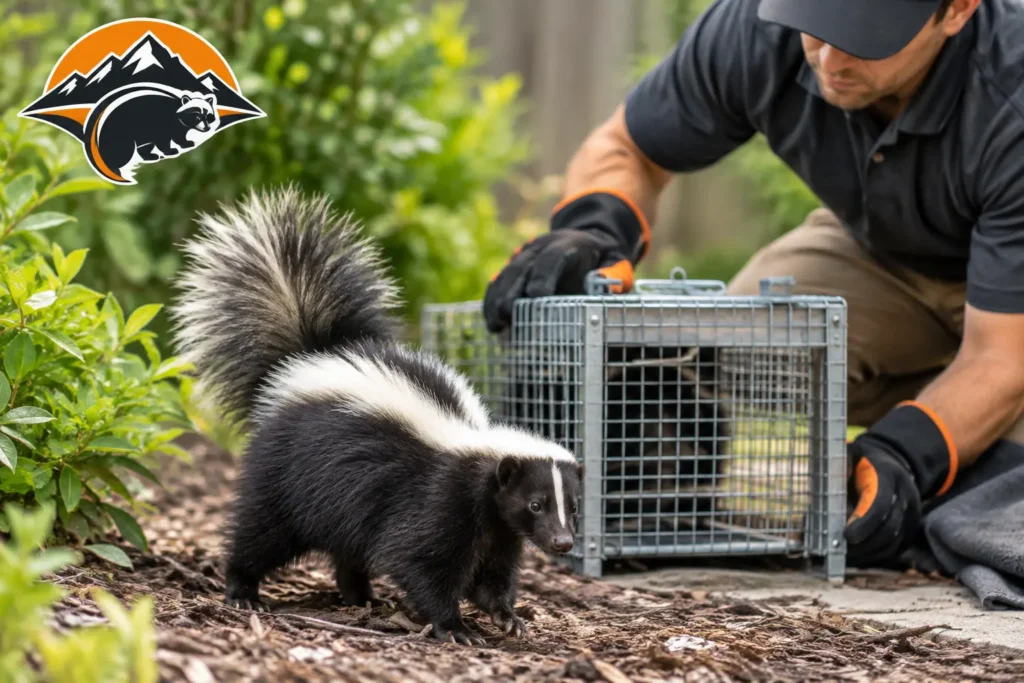
A skunk under a deck, cabin, shed, or crawl space can turn a quiet mountain property into a stressful situation fast. The smell is only part of the problem. Skunks can damage insulation, disturb pets, leave droppings near living areas, and return to the same sheltered spot if the entry point stays open. Humane skunk removal methods focus on getting the animal out safely, preventing a return, and protecting your home without poison or harmful treatment.
Start by Confirming a Skunk Problem
Skunks are most active from dusk through the night, so homeowners often notice them by smell before they see one. Fresh digging around a porch, small burrow openings beneath a structure, tipped pet-food bowls, or a strong odor near the foundation are common signs.
Do not assume every musky smell means a skunk is currently inside your structure. Odor can linger after an animal has moved on, especially around enclosed crawl spaces and wood decking. A professional inspection can identify active tracks, denning material, entry points, and whether another animal may be involved.
Keep pets indoors or supervised while you investigate. A curious dog can get sprayed in seconds, and direct contact with any wild animal creates an unnecessary safety concern. If a skunk appears sick, disoriented, unusually aggressive, or active in full daylight, do not approach it. Give it space and call a wildlife removal professional.
Why Humane Skunk Removal Methods Matter
A skunk is not trying to cause trouble. It is looking for a dry, protected place to rest or raise young, along with easy access to food. In Big Bear Lake, Lake Arrowhead, Crestline, and other mountain communities, decks, sheds, cabins, and under-home voids can offer exactly that shelter.
Humane removal protects more than the animal. It also protects your property from the problems caused by rushed or incomplete removal. Trapping an adult without checking for babies can leave young skunks behind. Sealing an opening too early can trap an animal under the building, leading to odor, damage, and a much harder cleanup.
The right approach is based on what is actually happening at the property. A single skunk using a shed calls for a different plan than a mother denning beneath a deck. Timing, weather, building design, and the presence of young all matter.
Never Seal an Active Den Opening
The most common mistake is blocking a hole as soon as a skunk is spotted. If the animal is still inside, it may dig another exit, push into a crawl space, or remain trapped beneath the structure. That can create a serious odor issue and unnecessary suffering.
Humane exclusion begins with an inspection. A trained technician determines whether the den is active, identifies all possible exits, and checks for signs that young may be present. If conditions are appropriate, a one-way exclusion device may allow the animal to leave without allowing it back inside. The opening is then secured only after activity has stopped and the area has been cleared.
This is especially important during the spring and early summer, when female skunks may have kits. Removal plans should account for dependent young rather than separating a mother from them.
Remove the Food Sources That Keep Skunks Nearby
Exclusion works best when the yard is less inviting. Skunks are opportunistic feeders, and many recurring problems start with easy meals around the property. Secure trash in durable containers with tight-fitting lids, bring pet food indoors before nightfall, and clean up spilled seed beneath bird feeders.
Fallen fruit, open compost, unsecured chicken feed, and outdoor grills with grease residue can also attract skunks. If you feed community cats or other outdoor animals, do so during daylight hours and remove leftover food promptly. This small change can make a major difference.
Grubs and insects in lawns may draw skunks to dig shallow holes in turf. It is tempting to treat the digging as a simple lawn problem, but it is often a food-source problem. Addressing the insect activity with an eco-conscious plan, while removing access to shelter, gives better long-term results than trying to scare the skunk away night after night.
Protect the Areas Skunks Use for Shelter
Once the skunk has safely left, the goal is to make re-entry difficult. Common vulnerable areas include gaps beneath decks, raised sheds, porches, crawl space vents, utility openings, loose lattice, and damaged foundation screens.
Effective exclusion materials need to be strong enough to resist digging and installed in a way that extends below ground level. Simply placing lightweight wire over a visible hole is rarely enough. Skunks can dig around poorly installed barriers, and nearby gaps may offer an easier route back under the structure.
A complete exclusion job addresses the full perimeter, not only the hole that was first noticed. This is where local experience matters. Mountain homes and vacation properties often have uneven terrain, older additions, exposed crawl spaces, and winter damage that create several hidden access points.
Avoid DIY Repellents and Risky Shortcuts
Strong-smelling products, bright lights, loud noises, and motion devices are often marketed as quick skunk fixes. Some may briefly disturb an animal, but they do not reliably solve an established denning problem. More importantly, attempts to force an animal out can cause it to spray near or beneath the home.
Do not use poison, smoke, flooding, or chemicals to drive a skunk from an enclosed area. These methods are inhumane, can harm pets and other wildlife, and may leave you with an inaccessible animal inside the structure. Glue traps and lethal traps are not a responsible answer either.
Relocating wildlife without the proper assessment can also create problems. A relocated skunk may struggle to survive in unfamiliar territory, and local rules can govern how wildlife is handled. Humane wildlife removal should follow applicable requirements and prioritize a safe outcome for both the animal and the property owner.
Handle Skunk Odor Without Spreading It
If a skunk has sprayed near the home, resist the urge to hose down the area immediately. Water can spread oily spray residue and push odor into porous surfaces. Keep windows near the affected area closed at first, particularly if the spray occurred beneath a deck or beside an air intake.
For outdoor surfaces, targeted cleaning can help after the source has been addressed. Porous materials such as unfinished wood, insulation, soil, fabric, and stored belongings may hold odor longer and may require professional treatment or removal. If spray has entered a crawl space, attic, or wall void, cleanup should include an inspection for contaminated nesting material, droppings, and damaged insulation.
Pet odor needs a different response from property odor. Use a veterinarian-approved skunk odor treatment or speak with your veterinarian if spray reaches your pet’s eyes or face. Avoid bringing a recently sprayed pet through the house, where oils can transfer to carpets and furniture.
When Professional Removal Is the Best Option
A skunk walking through the yard may not need removal at all. If it is simply passing through and has not settled beneath a structure, removing attractants and monitoring the area may be enough. The situation changes when a skunk is denning under a building, repeatedly returning, spraying near occupied spaces, or gaining access to a crawl space, garage, or interior area.
Professional help is also the safer choice when young may be present, the den is difficult to reach, or you are unsure whether the animal is actually a skunk. A trained wildlife technician can inspect the property, develop a humane removal plan, install exclusion materials, and address cleanup and disinfection when needed.
Outbackzack takes a no-poison, animal-conscious approach to nuisance wildlife removal, with practical solutions for homes, cabins, rentals, and commercial properties throughout Southern California mountain communities. The objective is not just to remove the immediate animal. It is to correct the conditions that allowed it in.
A skunk problem is often solved most effectively before it becomes an odor problem. If you notice digging, a new opening beneath a structure, or repeated nighttime activity around your property, act early. A careful inspection and humane exclusion plan can protect your home while giving wildlife a safe path away from it.