
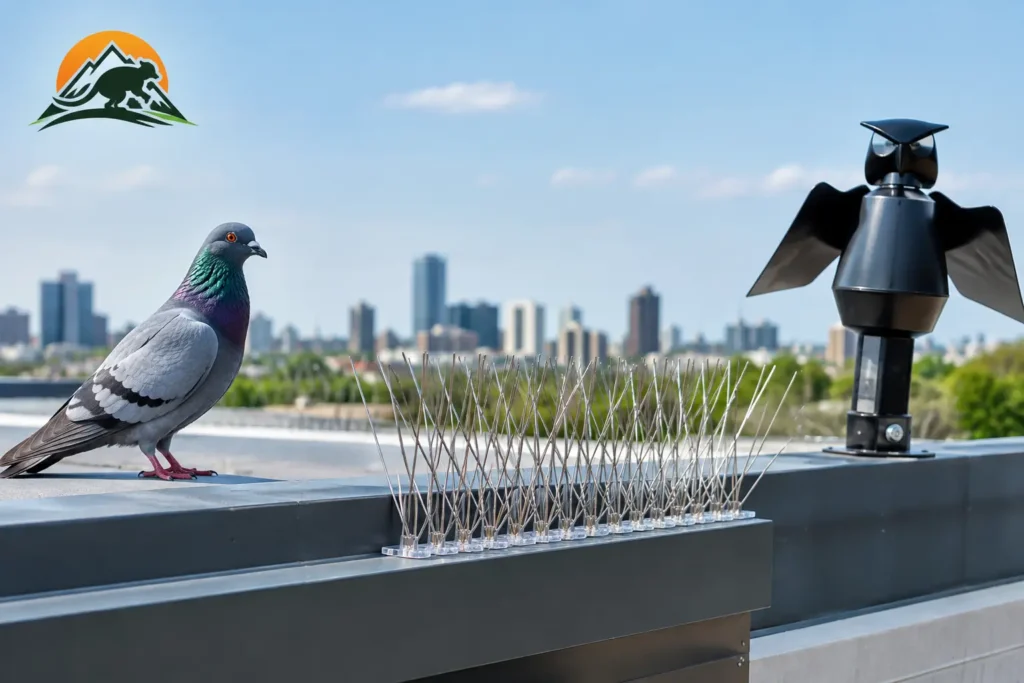
A few birds on a roof can quickly become a much bigger property problem. Pigeons roosting beneath solar panels, sparrows entering damaged vents, or swallows returning to old nest sites can leave behind droppings, nesting material, odors, noise, and damage. The top rooftop bird deterrents are not one-size-fits-all products. The right choice depends on the bird species, roof design, access points, and whether birds are resting, nesting, or entering the building.
For homes, cabins, vacation rentals, and commercial properties in mountain communities, a humane solution should prevent repeat activity without harming birds or creating new maintenance issues. The strongest approach is usually physical exclusion paired with cleanup and repairs, not poison, sticky products, or temporary scare tactics.
Why Rooftop Bird Problems Keep Returning
Birds return to roofs for the same reasons people return to a good shelter: protection, warmth, food nearby, and a dependable place to raise young. Roof valleys, chimney ledges, attic vents, signs, HVAC equipment, gutters, and solar panels create sheltered areas that can be difficult for property owners to inspect.
Mountain weather adds another layer of difficulty. Snow, wind, sun exposure, pine needles, and falling debris can loosen old screens, create gaps around vents, and make roofline repairs wear out faster. A deterrent that works well on a flat commercial roof may not hold up on a steep cabin roof with heavy winter conditions.
Before installing anything, identify what the birds are doing. Roosting birds need a place to land. Nesting birds need access to a protected cavity or ledge. Birds entering an attic or wall void require exclusion and repairs. Treating all three situations with one product often leads to wasted money and a recurring problem.
Top Rooftop Bird Deterrents for Lasting Control
Bird Spikes for Ledges, Signs, and Narrow Landing Areas
Bird spikes are among the most effective deterrents for pigeons and other larger birds that repeatedly land on narrow horizontal surfaces. Properly installed spikes make it uncomfortable for birds to perch on roof edges, parapets, chimney caps, signs, light fixtures, and certain HVAC ledges.
They are not meant to injure birds. Quality spikes work by removing the landing space, not by trapping or impaling wildlife. Installation matters more than the product label. Spikes must cover the full landing area, follow the contour of the surface, and be secured well enough to withstand wind, ice, and seasonal debris.
Spikes are less useful for small birds that can move between the points, and they do not solve a nesting problem inside a vent, attic, or roof cavity. They are best used where birds are visibly perching in the open.
Bird Wire for Clean, Low-Profile Protection
Bird wire systems use thin, tensioned wires mounted above a ledge. When birds attempt to land, the unstable surface discourages them from returning. This option can be a good fit for commercial buildings, storefronts, parapet walls, and visible architectural areas where bulky deterrents would be undesirable.
Bird wire is discreet, but it requires accurate installation and periodic inspection. A loose wire, missing spring, or damaged post can turn a carefully planned system into an ineffective one. It is generally a better choice for predictable landing strips than for irregular rooflines or areas with heavy pine needle buildup.
Exclusion Netting for Larger Open Areas
Professional-grade bird netting is often the best humane choice when birds are accessing a broad protected area. Netting can block birds from entering loading areas, open rafters, rooftop equipment zones, covered patios, and other spaces where spikes or wire cannot cover every access route.
The key is full enclosure. Netting with gaps at the edges simply gives birds another route inside. It must also be tensioned and attached correctly so birds cannot become entangled. When installed as a complete barrier, netting provides long-term control without relying on harmful products.
For commercial properties with recurring pigeon activity, netting can cost more upfront than a simple ledge deterrent. However, it may reduce ongoing cleanup, equipment contamination, and repeat service needs when a large area is involved.
Solar Panel Bird Guards
Solar panels create a dark, protected space that pigeons often use for roosting and nesting. Once birds settle beneath a panel array, droppings and nesting debris can accumulate around wiring and roof penetrations. This can create sanitation concerns, block drainage, and make future panel service more difficult.
Solar panel bird guards use durable mesh to close the gap around the panel perimeter while allowing normal airflow. The mesh should be installed without drilling into panels or damaging the roof. It should also be paired with removal of existing nests and debris before the perimeter is sealed.
Do not block birds under panels while young birds or active nests are present. Timing and inspection are essential, especially during nesting season. A humane wildlife professional can determine whether exclusion can proceed safely and legally.
Vent Covers and Chimney Caps
When birds are entering a structure, exclusion is more useful than a surface deterrent. Properly fitted vent covers, attic screens, roof jack guards, and chimney caps can stop birds from entering without restricting required airflow.
This is particularly important for sparrows, starlings, and other small birds that can fit through surprisingly small gaps. A loose vent screen may look acceptable from the ground yet have enough separation for repeated entry. Once inside, birds can build nests near insulation, ducting, and electrical components.
Material selection matters. Lightweight plastic mesh can crack under mountain sun and winter weather. Metal screening and purpose-built covers are usually more durable when correctly sized and secured.
Deterrents That Often Disappoint
Reflective tape, plastic owls, fake predators, and noise devices may create a short-term disturbance, but birds usually learn that there is no real threat. These products can have a limited role as temporary support during an exclusion project, but they rarely solve established rooftop activity on their own.
Bird gels and sticky substances should be avoided. They can trap feathers, collect debris, create an unsightly mess, and potentially harm wildlife. Poison is not a responsible rooftop bird-control method. It introduces risks to pets, scavenging wildlife, and the wider environment while failing to address the conditions that attracted birds in the first place.
A humane deterrent should change access to the property, not create suffering.
Start With Cleanup and Repairs
Installing a deterrent over an active roost without cleanup can leave the source of odor, bacteria, parasites, and stains in place. Bird droppings can be slippery when wet and may damage finishes over time. Nesting material can clog drains and gutters, while old nests may conceal insects or attract additional wildlife.
A complete service plan begins with safe removal of debris, followed by appropriate disinfection of affected surfaces. Next, the roof should be inspected for loose flashing, gaps around pipes, damaged screens, open attic vents, and compromised fascia. Repairing these weaknesses makes any deterrent more effective.
Property owners should avoid dry sweeping or blowing large accumulations of droppings. Disturbing contaminated material can send dust into the air. Roof work also carries obvious fall risks, especially on steep, icy, or debris-covered surfaces. Professional inspection is the safer route when activity is extensive or access is difficult.
Choosing the Right Rooftop Bird Deterrent
The best choice comes down to the behavior you see. Repeated perching on a narrow ledge may call for spikes or wire. Pigeons beneath solar panels need perimeter guards. Birds entering a vent or attic need properly installed screening or covers. Large protected openings are often best secured with netting.
Species matters, too. Pigeons, sparrows, swallows, woodpeckers, and protected migratory birds do not all behave the same way, and active nests may have legal protections. Never assume a nest can be removed immediately because it is inconvenient. A trained bird-control professional can identify the species, assess nesting status, and recommend humane timing and exclusion methods.
Outbackzack approaches bird problems with long-term property protection in mind: remove the attraction, clean the affected area, close the entry point, and use humane deterrents suited to the structure. For a roof that keeps drawing birds back, an on-site inspection can save far more than another season of cleanup and repairs.