
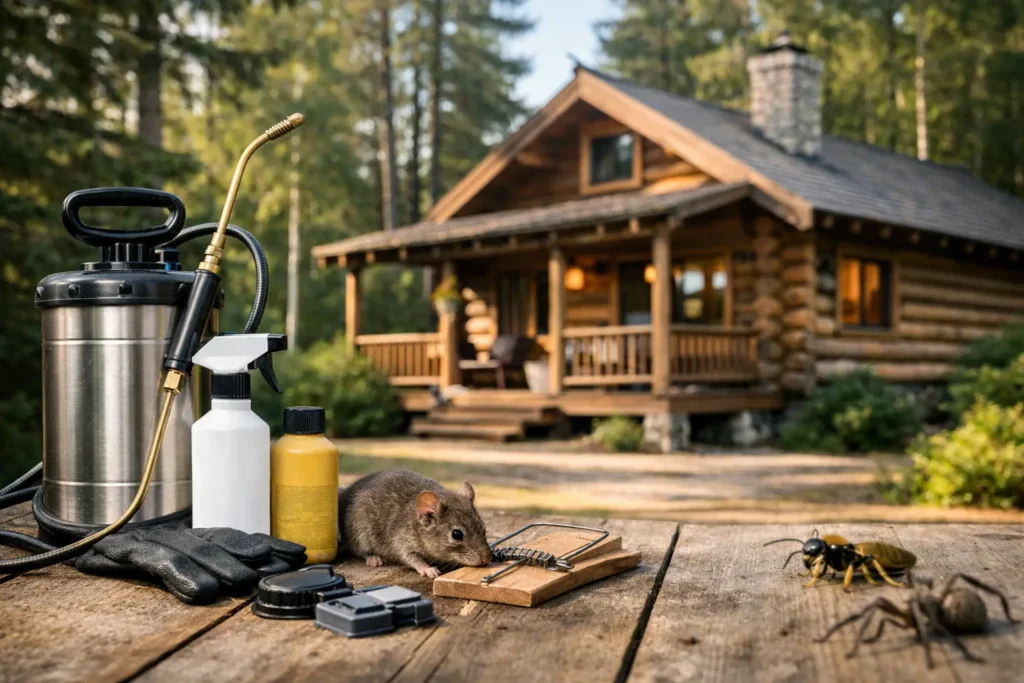
A cabin can look sealed up from the driveway and still offer a mouse, bat, squirrel, or insect exactly what it needs: a warm void, a quiet nesting spot, and a small opening hidden behind a deck or roofline. The best pest prevention for cabins is not a single spray or a few traps. It is a property-wide plan that closes access points, removes attractants, and catches activity before a small wildlife problem becomes contaminated insulation, chewed wiring, or a guest complaint.
Mountain cabins face different pressures than homes in dense neighborhoods. In Big Bear, Lake Arrowhead, Running Springs, Crestline, and nearby communities, wooded lots, seasonal vacancies, snow, firewood storage, and changing temperatures push animals toward buildings. Prevention must account for the structure, the surrounding property, and how often the cabin sits empty.
Start With a Cabin-Specific Inspection
The most effective prevention begins outside, where most intrusions start. A cabin inspection should follow likely travel routes from the ground to the roof, not just look for obvious holes at eye level. Mice can enter through gaps as small as a dime. Young rats, bats, birds, and squirrels each use different openings, which is why a general patch job often fails.
Check the foundation, crawl space vents, utility lines, garage corners, deck attachments, window screens, chimney areas, attic vents, fascia boards, and roof intersections. Pay special attention to places where pine needles, snow load, moisture, or weathered wood have opened a gap. In mountain properties, a loose vent cover or a rotted corner of trim may be enough to give wildlife access to the attic.
Signs of activity matter as much as the entry point. Fresh droppings, rub marks, gnawing, nesting material, grease marks along beams, scratching sounds, stained ceiling areas, or a persistent odor all help identify what is using the building. A proper inspection determines whether the problem is mice, rats, bats, raccoons, squirrels, birds, insects, or more than one species. The right prevention method depends on that answer.
Make Exclusion the Core of Pest Prevention
Exclusion means preventing animals and insects from getting inside without causing unnecessary harm. It is the foundation of long-term cabin protection because removal alone does not solve the opening that allowed the problem to begin.
For rodent prevention, durable materials matter. Expanding foam by itself is easy for rodents to chew and should not be treated as a permanent repair. Small gaps should be reinforced with appropriate metal screening, mesh, or other chew-resistant materials, then sealed and finished to match the area. Larger damaged sections may require repair to siding, trim, vents, soffits, or foundation access points.
Ventilation still has to work after repairs. Covering every opening without considering airflow can create moisture problems and damage the cabin in a different way. The goal is to use properly fitted, wildlife-resistant covers that allow required ventilation while blocking entry.
Chimneys and roof features also deserve attention. A properly installed chimney cap can prevent birds, squirrels, and raccoons from entering while allowing smoke to vent safely. Attic and gable vents should be screened with materials sized for the species you are trying to exclude. Bird exclusion is especially important around eaves, ledges, and rooflines where pigeons, sparrows, swallows, or woodpeckers may return season after season.
Timing is critical. Never seal an opening while animals may still be inside, particularly during nesting or maternity seasons. Trapping a mother away from dependent young can lead to animal suffering, odor issues, and further damage as the animal attempts to get back in. Humane removal and a controlled exclusion plan protect the building while respecting local wildlife.
Remove the Things That Attract Pests
Even a well-sealed cabin can draw pest activity if food, water, or shelter is easy to find. The aim is not to make a mountain property sterile. It is to stop the cabin from becoming the easiest option in the area.
Keep garbage in durable containers with tight-fitting lids, especially between guest stays or during long periods away. Do not leave pet food, bird seed, suet, or open food storage in the garage, pantry, or enclosed porch. Rodents often begin with a food source in storage and then expand into wall voids, attics, and crawl spaces.
Firewood should be kept off the ground and away from the cabin whenever possible. A woodpile beside the structure creates sheltered habitat for insects, rodents, and sometimes snakes. Moving it farther from the building reduces the direct path from nesting area to entry point. Similarly, clear leaf litter, stacked materials, and dense debris from around the foundation and under decks.
Water management is another overlooked part of prevention. Repair dripping exterior faucets, direct runoff away from the foundation, and keep gutters clear. Standing water and damp crawl spaces attract insects and can soften wood, making structural gaps easier for pests to exploit.
Protect the Areas Cabins Hide From You
Cabins often have enclosed decks, crawl spaces, attic voids, garages, and storage sheds that go unchecked for months. These are the places where a small issue can grow quietly. A vacation rental may look clean after a turnover while rodent activity continues behind a water heater or above a ceiling.
Set a regular inspection schedule based on how the property is used. Full-time homes should be checked seasonally, with extra attention before colder weather. Cabins that sit vacant should be inspected before opening for the season, after major storms, and before extended closures. Property managers should include a quick exterior and utility-room check in their routine maintenance process.
Inside, look under sinks, behind appliances, around water heaters, in closets against exterior walls, and along garage edges. In the attic, inspect from a safe access point for disturbed insulation, droppings, trails, or daylight around roof penetrations. Avoid sweeping or vacuuming unknown droppings without appropriate precautions. Rodent and bat waste can create health concerns, and contaminated areas may require professional cleanup and disinfection.
Seasonal Prevention Matters in Mountain Communities
Pest pressure changes with the weather. In fall, rodents and other wildlife seek protected indoor spaces before temperatures drop. Winter snow can conceal ground-level damage and encourage animals to use decks, roofs, and stored materials as travel routes. Spring brings nesting activity for birds and increased wildlife movement, while summer can expose insect activity and attract pests to outdoor food, trash, and water sources.
After heavy wind, snow, or rain, inspect roof edges, screens, vent covers, and tree limbs near the cabin. Storm damage can create a new entry point overnight. Trees do not need to be removed simply because they are near a home, but branches contacting the roof or siding can give squirrels and rodents an easy bridge. Trim with the health of the tree and safe clearance in mind.
For cabins near forests or open space, prevention also requires realistic expectations. Wildlife belongs in these mountain environments. The objective is not to eliminate animals from the property. It is to keep them out of living spaces, attics, crawl spaces, and areas where they can cause damage or contamination.
When DIY Prevention Is Not Enough
A door sweep, sealed food containers, and repaired screens are worthwhile steps, but recurring activity usually means there is a missed access point or a larger issue inside the structure. Store-bought repellents may offer limited, temporary results, particularly when an animal already has a nest or established route. Poison is also a poor fit for many cabin situations because animals can die in inaccessible walls, create odor problems, and expose pets, wildlife, or scavengers to unnecessary risk.
Professional help is especially appropriate when you hear attic noises, find bat or rodent droppings, see damage to wiring or ducts, notice birds entering vents, or suspect an animal beneath a deck or in a crawl space. The work should include identification, humane removal when needed, exclusion repairs, and cleanup recommendations. Skipping the cleanup stage can leave odors and scent trails that encourage new activity.
Outbackzack helps mountain property owners address the full problem, from humane nuisance animal removal to rodent proofing, block-out repairs, sanitation, and prevention. For a cabin that is vacant part of the year or used as a rental, this complete approach can prevent the same issue from returning with the next season.
A protected cabin is built through attention to small details: one screened vent, one repaired roofline gap, one moved woodpile, one inspection before winter. Address those details early, and your cabin remains a comfortable retreat for people while wildlife stays where it belongs – outside.