
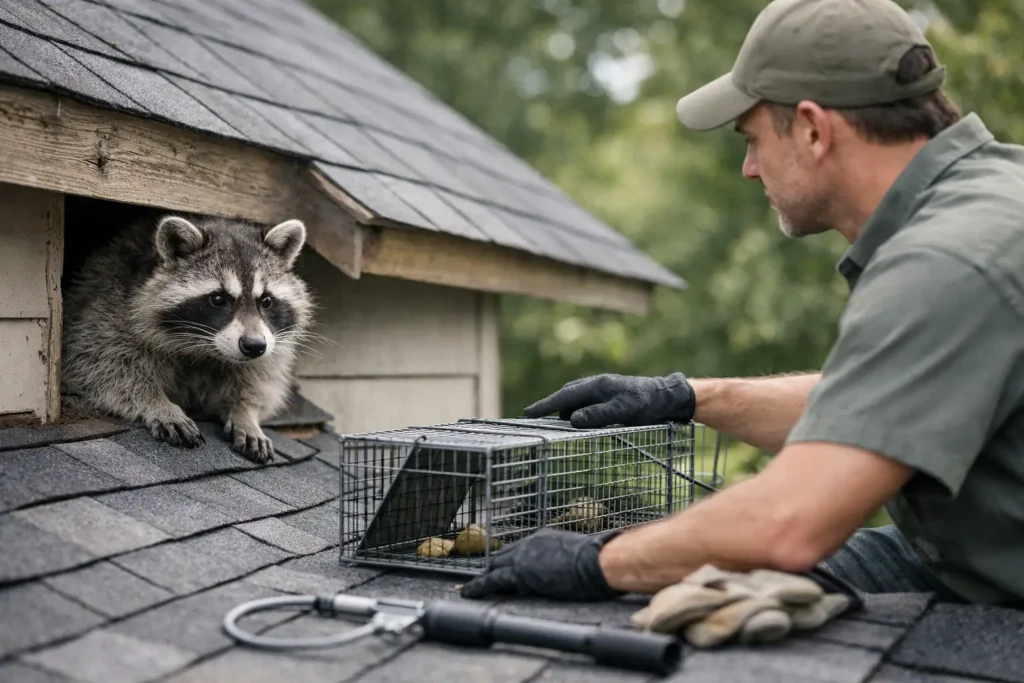
You usually do not see the raccoon first. You hear it. Heavy scratching over the ceiling at night, thumping near the chimney, torn vent screens, or trash scattered across the driveway by morning. In mountain communities, humane raccoon removal is not a niche service. It is often the difference between a quick fix and a recurring property problem.
Raccoons are smart, persistent, and surprisingly strong. Once they find a warm attic, crawl space, shed, or under-deck hiding spot, they tend to return unless the whole problem is handled correctly. That means more than getting the animal out. It means identifying how it got in, checking for young, cleaning contaminated areas, and sealing the structure so another raccoon does not move in next week.
What humane raccoon removal really means
Humane raccoon removal is not about ignoring the problem or hoping the animal leaves on its own. It means removing raccoons in a way that protects people, pets, property, and the animal whenever possible. The goal is safe capture or eviction, careful handling, and long-term prevention rather than a harsh, careless response that creates more damage.
For homeowners and property managers, the practical value is simple. Humane methods tend to work better because they account for raccoon behavior. A frightened mother raccoon in an attic will not respond the same way as a solitary raccoon under a cabin. A rushed removal can separate mothers from babies, push an animal deeper into a wall, or leave entry points wide open for the next one.
That is why professional wildlife removal starts with inspection, not guesswork. You need to know where the raccoon is nesting, whether young are present, what damage has already occurred, and how urgent the health risk is.
Why raccoons become a serious property issue fast
A raccoon problem can go from annoying to expensive in a short time. They tear shingles, peel back roofing materials, rip through vent covers, and damage soffits to gain access. Inside attics and crawl spaces, they crush insulation, chew materials, and leave behind urine and droppings that contaminate the area.
There is also a safety issue. Raccoon waste can carry harmful organisms, and any wild animal cornered inside a building becomes unpredictable. If a raccoon has been nesting in a rental property, vacation cabin, or commercial structure, the cleanup standard matters just as much as the removal itself.
In mountain areas, this risk can be higher because homes are often surrounded by trees, seasonal food sources, and quiet shelter spots. Cabins that sit empty for part of the week or season are especially vulnerable. A raccoon only needs one weak screen, one uncapped chimney, or one construction gap to get started.
Humane raccoon removal in mountain homes takes a local approach
Not every raccoon issue looks the same, and local conditions matter. A wooded property in Big Bear or Lake Arrowhead presents different access points than a suburban lot in a flatter area. Snow loads, roof design, older cabins, detached garages, and open crawl spaces all affect where raccoons settle and how they should be removed.
This is one reason generic pest control is often not enough. Humane raccoon removal in mountain communities requires experience with the way wildlife uses elevation, weather, and structure design. A technician needs to recognize travel routes, nesting patterns, and the weak spots raccoons repeatedly target on cabins, vacation rentals, and year-round homes.
Timing matters too. During baby season, the removal plan has to account for dependent young. During colder months, raccoons are more motivated to find protected indoor shelter. A method that works in one season may need to be adjusted in another.
The real process behind humane raccoon removal
A proper raccoon job usually starts with a full inspection of the exterior and the suspected interior access area. The point is to find the active entry, secondary gaps, nesting signs, droppings, and damage. If there is noise in the attic, that does not always mean the entry is directly above that room. Raccoons can travel surprising distances inside a structure.
From there, the removal strategy depends on what is found. In some cases, one-way exclusion devices can allow a raccoon to exit without re-entering. In other situations, live trapping may be necessary, especially when access is limited or the animal is using multiple shelter points. If babies are present, they must be located and handled properly as part of the removal process.
This is where experience matters most. A sloppy job often removes one visible animal but leaves behind young, contaminated insulation, or an open gap that invites the next raccoon in. A professional humane approach is more complete. It removes the current threat while reducing the chance of another callout a few weeks later.
Cleanup and sanitation are not optional
Once raccoons have occupied an attic, crawl space, or wall void, the problem is not over when they are gone. Their nesting material, droppings, urine, and disturbed insulation can leave behind odor and contamination that continue to affect the property.
That matters for health, indoor air quality, and future wildlife activity. Strong scent trails can attract other animals to the same location. In rental properties and commercial buildings, leftover contamination can also create complaints, liability issues, and ongoing odor problems.
A complete service should address cleanup, disinfection, and removal of soiled material when needed. There is no single answer for every site. A lightly used shed may need less remediation than a heavily contaminated attic above occupied living space. The right solution depends on how long the raccoon has been there and how much damage it caused.
Exclusion is what makes humane raccoon removal last
The most overlooked part of humane raccoon removal is what happens after the animal is out. If the access point is not repaired and the surrounding vulnerabilities are not addressed, the property stays at risk.
Exclusion means physically closing entry points and reinforcing likely target areas. That may include repairing vent screens, sealing roof gaps, securing crawl space openings, reinforcing soffits, screening chimneys, or repairing damaged fascia. The goal is not to trap wildlife inside. The goal is to make the structure far less attractive and far less accessible once removal is complete.
This is where property owners often save the most money over time. Removal without exclusion can become a cycle. Removal with repair and proofing changes the outcome.
When not to try it yourself
Some homeowners are tempted to handle raccoons on their own, especially if the animal is only showing up around trash cans or under a deck. The problem is that raccoons are not low-risk wildlife. They can bite, scratch, and carry disease. They also do a good job of hiding young in hard-to-reach areas.
DIY efforts often fail for simple reasons. The wrong trap placement, no plan for babies, poor handling, or sealing an opening too early can make the problem worse. You might force the raccoon deeper into the building, create a dead animal problem, or leave active contamination untouched.
If the raccoon is inside your attic, chimney, crawl space, garage, or wall void, or if you are hearing repeated nighttime activity, this is usually a professional job. The same goes for homes with children, pets, tenants, or any property where sanitation and liability are major concerns.
What property owners should look for in a raccoon removal service
The best service is not just the fastest one to set a trap. You want a company that handles inspection, humane removal, cleanup, and exclusion as one connected process. If those pieces are separated, the root problem often stays behind.
Ask whether the company checks for young, performs entry-point repairs, and offers sanitation or disinfection where needed. Ask whether they understand the challenges of mountain homes, cabins, and seasonal properties. And ask how they plan to keep the issue from coming back.
For local property owners, that combination matters. A wildlife company that understands regional structure types, weather patterns, and common entry points can move faster and solve the problem more completely. That is the difference between a temporary relief call and real protection.
At Outbackzack, that humane and eco-conscious approach is the point. The work is not just about removing a nuisance animal. It is about protecting homes, rentals, businesses, and the wildlife that shares these mountain communities.
If you hear scratching overhead, find torn vents, or see signs of raccoon activity around your property, act early. The sooner the problem is inspected, the more options you usually have for safe removal, cleaner remediation, and repairs that hold up.